
Introduction — The Strange Arithmetic of War
The proposition is startling: war, despite its immediate carnage and expense, often finds ways to ‘pay for itself’ over time. Not in any moral accounting, but in the balance sheets of states, corporations and elites. This article unpicks the mechanics behind that grim equation — how states convert battlefield losses into long-term economic advantage, how private actors extract rent from conflict, and how societies are left with deferred bills that are rarely tallied in full. Expect uncomfortable truths, unlikely mechanisms and an argument that the true return on war is less about GDP and more about restructured ownership.
1. War Bonds, Inflation and the Hidden Tax
At the simplest level, governments finance war through borrowing, printing money and raising taxes. Each route has distributive consequences. War bonds are sold as patriotic investments; they mobilise domestic savings and create a sense of collective sacrifice. When governments monetise debt — printing money to buy revenue — the result is inflation, a stealth tax that erodes the real value of wages and savings. Who bears the cost? Typically, savers and lower-income groups lose purchasing power while debt is repaid in depreciated currency. That redistribution acts like a long-lived transfer from dispersed citizens to the state and its creditors. For policymakers, inflation and bond-financed deficits are tools that push the cost of war into the future and across social strata.
2. The Military-Industrial Lifecycle: Contracts, Patents and Permanent Customers
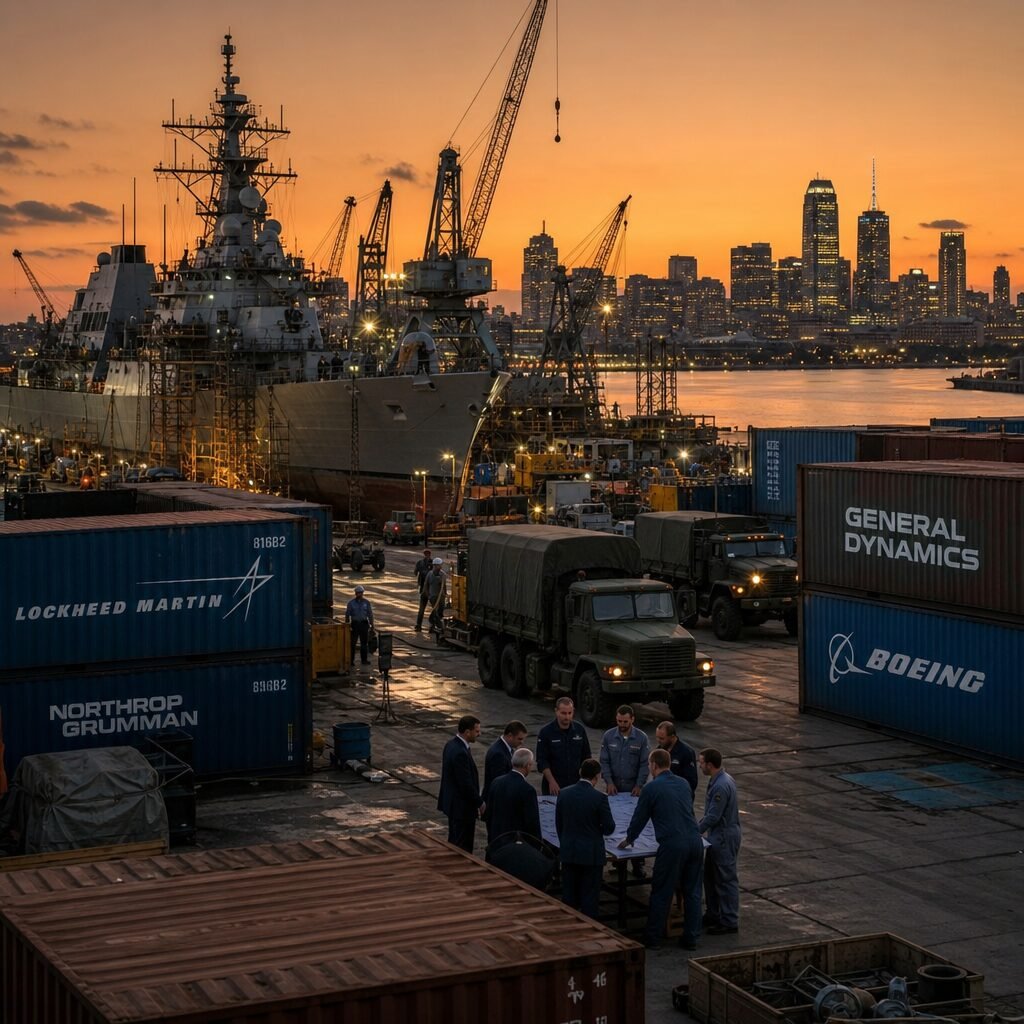
War briefs create demand spikes for weapons, logistics and infrastructure. Firms that capture wartime contracts do more than profit in the short term; they are often gifted patents, scale, skilled labour and regulatory relationships that endure. Post-conflict, those companies pivot to peacetime products, export markets or reconstruction contracts. The state becomes a permanent customer: budgets normalise at higher defence baselines, procurement bureaucracies expand, and volatility in military spending becomes institutionalised. This lifecycle converts a temporary surge into a persistent revenue stream — a return on corporate investment in wartime opportunity that ordinary taxpayers underwrite.
3. Asset Transfers and the Economic Spoils of War
Beyond legal contracts lie more direct transfers. History is replete with examples where conflict results in privatisation by other means: seized land, discounted asset sales, indemnities and reparations. Post-war reconstruction often benefits politically connected firms that secure lucrative rebuilding deals. Occupation administrations may rewrite property laws, enabling rapid concentration of wealth. In these cases, war acts as a mechanism for reassigning assets and claims — a reallocation that enriches particular groups while dispersing costs across a population or absorbing them into sovereign debt.
4. Innovation, Diffusion and the Long Tail of Military R&D
One of the more socially palatable returns on war is technological spillover. Military R&D has spawned communications, aerospace, medicine and the internet. Yet such innovations are a double-edged sword: they arrive in a highly securitised context, funded by public money, then frequently commercialised by private firms that capture downstream returns. Moreover, militarily driven innovation can create path dependencies — whole sectors grow around defence-led standards and regulatory frameworks. The social return is real, but it is also filtered through patent regimes, market structures and geopolitical priorities, making the public’s share of that return an open question.
5. Geopolitical Rent and Resource Security
Wars are sometimes investments in position as much as in destruction. Securing trade routes, gaining control over resources, or installing friendly regimes can yield long-term economic rents: preferential access to oil, minerals, or markets; shipping lanes that lower transport costs; or political influence that secures favourable trade terms. These gains are rarely priced transparently. Instead, they appear as lower import costs, strategic contracts for national champions, or avoided competition. The return is geopolitical: a stream of economic advantages that can accrue to a state and its firms for decades after the guns fall silent.
6. The Social and Fiscal Discount — Who Really Pays?
If a war is ‘paid for’ by higher future taxes, inflation and deferred social spending, that is itself a form of return — for those who benefit from the war’s proceeds and a loss for those who shoulder the costs. Veterans’ care, long-term disability, broken infrastructure and lost human capital become public liabilities. Yet the political economy of memory and institutional incentives means many of these costs are underfunded or shifted onto future generations. The discounting of human and social costs — the refusal to capitalise them into immediate budgets — is central to how war appears to pay for itself on paper even as society bears the burden in lives and wellbeing.
7. Financial Engineering: War, Debt Markets and New Instruments
Modern finance invents instruments to move war costs off balance sheets or to marketise them. Sovereign debt is tranched, securitised or insured; pensions and insurers are exposed to government securities; central banks act as buyers of last resort. Private equity and hedge funds sometimes take positions that profit from post-conflict privatisations. The result is a complex web where risk is reallocated to those best able to absorb it — often large institutional investors — and liquidity is created that makes large wartime deficits politically sustainable. Financial engineering therefore turns episodic war spending into tradeable claims and recurring income for financial intermediaries.
8. Perverse Incentives and the Moral Hazard of Return
When war consistently produces winners — contractors, banks, political coalitions — incentives to resort to force can harden. The knowledge that certain actors benefit creates lobbying and ideological networks that normalise high defence spending and foreign interventions. This moral hazard is subtle: it operates through employment statistics, regional economies dependent on bases and electoral politics that reward visible security postures. Over time, these incentives shape national strategy, making conflict more likely and its financing easier to justify.
Conclusion — Counting What We Value
War’s financial logic is not a single ledger. It is a web of immediate expenditures, deferred losses, redistributed wealth and enduring institutional changes. The ‘return’ on war — the way it can pay for itself — depends on who counts the costs and who receives the benefits. If analysis only tallies GDP growth, contractor profits and post-war trade advantages, war can look economically rational. If it also counts human suffering, lost opportunities and social fragmentation, the arithmetic collapses. Recognising the full set of mechanisms by which war funds future advantage is essential to any honest debate about conflict: not to romanticise peace as painless, but to insist that its costs and returns be counted fully and transparently.