
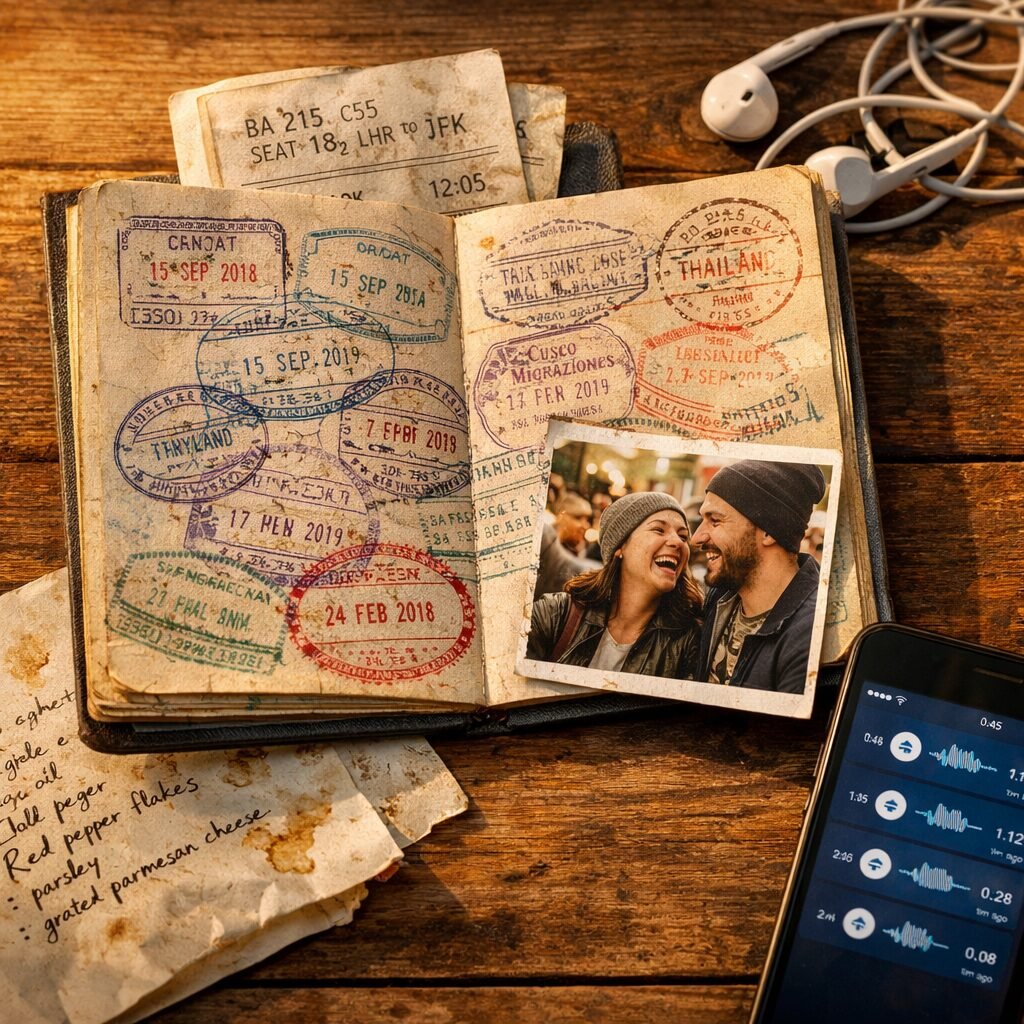
The Passport as a Palimpsest
When people think of the international, they imagine borders, flights and treaties. But for many, the passport is less a bureaucratic object and more a palimpsest: a layered record of decisions, risks and relationships. Turn its pages and you find not only visas and entry stamps but the traces of a life rewritten — a marriage certificate tucked behind a stamp, a child’s scribble lodged in an old boarding pass, a faded sticker from a rally in 2011.
For Maria, who left Seville at 19, each stamp is a small elegy. She keeps a torn ticket from her first freelance job in Lisbon the way others keep photos. For Jamal, a logistics manager from Accra, the passport carries proof he exists beyond a single economy. These artefacts chronicle choices made under duress, curiosity and hope. They map routes that global geopolitics never show: the detours taken when visas were denied, the long layovers that became friendships, the forced returns that precipitated reinvention.
Letters, Screens and the Anatomy of Long-Distance Intimacy
International life reshapes how people sustain intimacy. The romantic ideal of the ‘jet-setter’ disguises a quotidian truth: relationships survive, mutate or fray on the backbone of asynchronous communication. Before smartphones, letters and postcards carried a different cadence; now, messaging apps compress time zones into instant reactions and create new strains.
Take Aruna and Vít, partners who met at a climate conference and have since lived in separate countries for five years. They keep a ritual: every Sunday at 20:00 they send a two-minute voice note summarising the week’s small victories. Those messages have become an archive — a private oral history of careers, illnesses, births and quiet betrayals. The international, in practice, is often a mosaic of such tiny, persistent acts of care.
Work Without Walls: Careers Shaped by Crossing
Global labour markets have produced an unusual class of workers: the border-crosser whose CV reads like a world map. These professionals do not merely export labour; they transplant skills, languages and institutional know-how. Yet each move demands reinvention — relearning local codes, renegotiating identity and navigating unexpected privileges and exclusions.
Consider Amina, a software engineer who has worked across Nairobi, Toronto and Berlin. Her mobility has been an asset and an obligation: while she commands higher salaries and broader networks, she also explains cultural nuances repeatedly in meetings, tutors colleagues in English idiom, and manages recurring visa renewals that interrupt momentum. The international workplace becomes less about visas granted and more about the invisible labour required to translate oneself into each context.
Return, Homecoming and the Politics of Belonging
Returning is rarely a mirror of departure. Migrants who come home discover that absence rewrites both them and the place they left. Some experience a bittersweet reintegration, others an estrangement so profound it prompts a second migration.
After a decade teaching abroad, Ravi returned to Chennai and found his family home physically unchanged but socially rearranged. Neighbours treated him as if he were a visiting professor rather than a son — polite but distanced. His children’s slang, his culinary preferences, even his political assumptions mark him as both insider and outsider. Homecoming often requires people to perform a new kind of belonging, negotiating histories on both sides of the border.
Rituals That Anchor Transience
People invent rituals to stabilise lives in motion. From a grandmother’s recipe written in the margins of a visa form to a playlist that summons a village market, these practices are the emotional scaffolding of international life. They are small acts that resist the erasure of place.
In Havana, a dance teacher instructs expatriate students in a Saturday class that blends new arrivals with seasoned émigrés. They bring food, teach slang, and form a temporary village. In Osaka, a group of African nurses meets monthly to share home-cooked meals and swap legal tips. These networks are not romantic escapes; they are pragmatic infrastructures of belonging, offering legal advice, childcare swaps and emergency funds — the quiet systems that make mobility sustainable.
What the Personal Tells Us About the Global
International affairs are often narrated through treaties and statistics, but the human stories refract these macro forces into texture and consequence. Personal journeys reveal how policies land in living rooms, how trade deals translate into job opportunities, and how border controls reshape family timelines.
Listening to these accounts should change how we imagine ‘international’ — not as abstract connectivity but as a constellation of lives negotiating continuity and change. The policy debates would do well to begin there: with the passport stamps, voice notes and recipes that tell us why people move, how they stay connected, and what they lose and gain in the process.