
When “International” Becomes a Product Label — and Why That Traps Shoppers
Many retailers, platforms and brands use the word “International” as if it were a quality stamp rather than a logistical descriptor. Shoppers see an “International” tag and assume superior materials, global customer service and universal compatibility. The reality is messier: “International” often just means a collection of SKUs from other markets bundled with minimal adaptation. That mismatch sets buyers up for disappointment — wrong plugs, unsupported warranties, incompatible software, or even regulatory problems.
To avoid this trap, treat “International” as a starting point for questions, not an endorsement. Ask about voltage and plug types, warranty terms that cover your jurisdiction, certification marks (CE, UKCA, FCC), provenance of parts and local support options. Demand precise model numbers rather than marketing labels and, where possible, confirm compatibility with a local user or technician.
Mistake 2: Ignoring Total Cost of Ownership
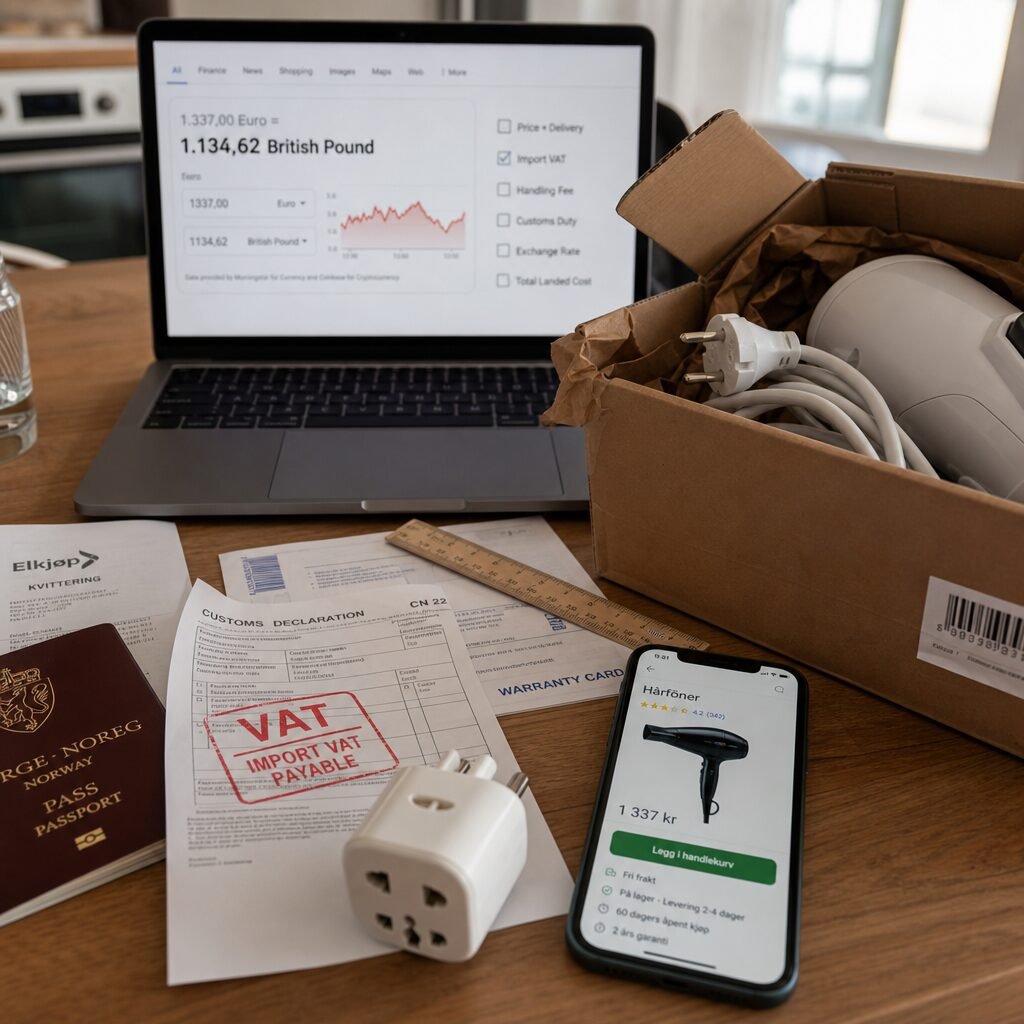
Shoppers frequently focus on headline price and miss hidden add-ons: import duties, VAT, customs brokerage, currency conversion fees, returns postage and longer downtime for repairs. An inexpensive “international” smartphone can become expensive once you add tax and a non-refundable return courier.
Avoid this by calculating lifetime cost: list purchase price plus foreseeable expenses for taxes, shipping, repairs and consumables. Use local tax calculators and check seller terms about who pays duties. For high-value items, factor in the cost and time of returning goods overseas and whether local technicians can service the product.
Mistake 3: Assuming One-Size-Fits-All Regulations
Regulatory landscapes diverge widely. Foods, cosmetics, electronics and medical devices can be perfectly legal in one country and prohibited in another. For example, certain cosmetics ingredients and food additives allowed in the EU may be restricted in the UK post-Brexit, and vice versa. Importing a health device without the necessary approvals can result in seizure and fines.
Avoid regulatory missteps by checking both export and import rules. Use government customs portals and professional advisers for restricted categories. For persistent grey areas — think supplements or novel foods — ask suppliers for test certificates and seek local legal or regulatory confirmation before buying.
Mistake 4: Overvaluing Brand Globalism — Underestimating Local Aftercare
People idolise global brands and assume that a multinational logo guarantees local service parity. Yet global brands often rely on regional partners, and the level of aftercare varies widely. A global warranty may mean you ship to a central hub overseas rather than receiving local replacement or on-site repair.
Mitigate this by reading the small print of warranty and service agreements. Seek sellers who explicitly state local service centres and parts availability. If buying from marketplaces, prefer vendors with local return addresses or verified in-country operations.
Mistake 5: Confusing Cultural Authenticity with Quality
When shopping for international food, fashion or art, buyers conflate cultural authenticity with superior craftsmanship. A garment labelled “handmade” in a particular country might be mass-produced; an “authentic” spice blend could be a shelf-stable, diluted version. Conversely, quality local makers may not use the stereotypical markers buyers expect.
Avoid disappointment by seeking provenance documentation, artisan profiles, and transparent supply chains. Look for independent verifications — fair trade certifications, craft guild listings, or platform-backed authenticity guarantees — and be wary of romanticised descriptions that lack tangible proof.
Mistake 6: Neglecting Geopolitical and Supply-Chain Risk
International shopping sits on geopolitics. Tariffs, sanctions, export controls and sudden border closures can turn a reliable supplier into an unreachable one. The pandemic showed how quickly logistics can collapse; since then, trade friction and regional conflicts have added new unpredictability.
Protect purchases by vetting suppliers for supply-chain redundancy and checking their contingency plans. Prefer vendors with multi-region distribution or local stock. For critical purchases, spread risk by not relying on a single overseas supplier and consider contractual clauses addressing delays and force majeure.
Real-World Mini Case Studies: Lessons from Failed “International” Buys
A UK buyer ordered a high-end electric kettle marketed from an EU shop labelled “international edition” — incompatible voltage and a voided warranty when modified. A small café imported a branded coffee grinder only to find spare parts unavailable domestically, leading to months of diminished service. An online collector purchased a purportedly “vintage” Japanese camera that arrived as a modern reissue misrepresented by photos.
Each story shares a common root: assumptions. The remedies were practical: insist on verified model numbers and service networks, request parts lists before purchase, and use conditional payment methods that protect returns.
Practical Checklist: How to Shop “International” Without Regret
Before you buy, run through this concise checklist:
– Confirm exact model numbers and local compatibility (voltage, software, frequency).
– Calculate total landed cost: price + duties + VAT + return shipping.
– Verify warranty scope and local repair options in writing.
– Check regulatory compliance and required certifications.
– Ask for provenance or authenticity documents for cultural goods.
– Vet seller logistics resilience and multiregional distribution.
– Use payment methods that allow disputes and consider escrow for large transactions.
Treat each affirmative answer as a green light; a single strong red flag should prompt pause or further inquiry.
Conclusion: From Impulse to Informed International Buying
Shopping “international” can yield rare finds, better prices and novel experiences — provided you shop with a mindset that replaces romance with verification. The top mistakes are not exotic; they’re everyday assumptions. By interrogating labels, accounting for total costs, confirming regulatory status and planning for aftercare and geopolitical risk, shoppers can enjoy the upside of international commerce without the usual pitfalls. In short: assume curiosity over trust, documents over branding, and contingency over convenience.