
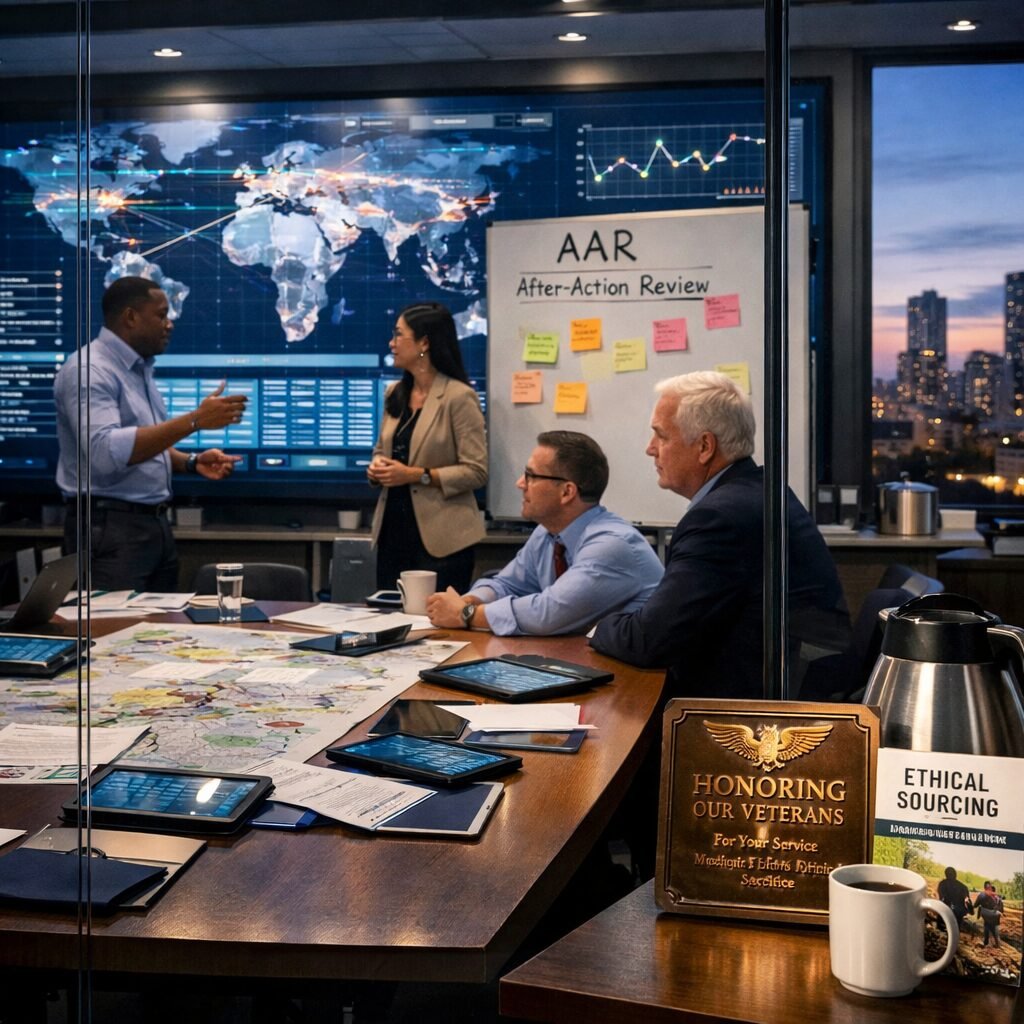
War Rooms: From Crisis Centres to Everyday Strategy Hubs
Many companies have borrowed the atmosphere and vocabulary of wartime command to turbocharge decision-making. What began as literal ‘war rooms’ for damage control during PR crises has evolved into permanent, multidisciplinary strategy hubs modelled on military operations centres. These rooms use whiteboards, large-format real-time dashboards, and standing briefings to compress decision cycles. Start-ups and retailers run daily ‘situation reports’ on logistics and customer sentiment; energy firms practice ‘red-team’ assaults on infrastructure resilience; and finance houses run tabletop market-simulation drills drawn from military planning. The result is an organisational rhythm steeped in urgency and clarity: short directives, rapid feedback loops and devolved authority — techniques borrowed from conflict that businesses now use to manage rapid change rather than battlefields.
Wargaming for Business: Scenario Planning Made Kinetic
Corporate wargaming — once the preserve of defence contractors — has become a staple for companies facing geopolitical and technological uncertainty. Consulting firms run immersive simulations in which executives play opposing forces to reveal blind spots in strategy, supply chains and regulatory readiness. These exercises often use red teams to play competitors or hostile states and deploy war-gaming software adapted to commercial variables (market share, tariffs, cyber incidents). Beyond risk assessment, wargames cultivate cognitive agility: leaders practice rapid reframing, decision discipline and contingency trade-offs in ways boardroom debates rarely permit. Several firms now yearn for the tangible stakes of a wargame: the discipline it imposes on thinking, and the humility it instils when plans unravel under competitive pressure.
Soldier-to-Serve: Military Aesthetics in Hospitality and Retail
An unexpected commercial trend is the repurposing of military aesthetics and rituals to create novelty consumer experiences. Boutique hotels convert decommissioned barracks into minimalist stays; craft cafés stage ‘trench’ brunches with reclaimed sandbags and authenticity panels; and retail pop-ups adopt propaganda-style posters and drill-sergeant hosts for product launches. Some brands walk a careful line by focusing on the discipline, camaraderie and endurance symbolic of military life rather than the violence. They leverage tactile relics — brass nameplates, map-lined wallpaper, radio static ambience — to sell narrative and belonging. Ethically minded operators pair these designs with clear contextualisation: historical plaques, proceeds to veteran charities, and partnerships with conflict-heritage groups to avoid trivialising suffering while monetising the evocative power of martial form.
Conflict Tech Goes Commercial: From Counter-UAV to Climate Defence
Technologies developed for modern conflict are increasingly finding peaceful commercial markets. Counter-drone systems built to protect airports are adapted by stadiums and film sets; hardened mesh communications used by NGOs in conflict zones are repurposed for festival organisers seeking resilient networks; and satellite-imaging analytics used to monitor troop movements are now critical to insurers and commodity traders predicting crop failures. The commercialisation path often follows demilitarisation and privacy audits, but it also raises regulatory and ethical questions. Companies must balance profitability with safeguards against misuse: provenance tagging, usage licensing and collaboration with civil-rights groups are becoming standard practices to ensure that conflict-born tech serves civic resilience rather than enabling new forms of harm.
Conflict-Inspired Culture Hacks: Rituals, Language and Performance
Beyond physical spaces and tech, businesses are experimenting with conflict-derived cultural practices to build cohesion. Organisations borrow rituals like morning briefings, after-action reviews, and structured debriefs to normalise candour and learning from failure. Language too — ‘frontline workers’, ‘mission objectives’, ‘allied partners’ — reframes tasks with purpose and urgency. Some firms pair these with theatrical, gamified internal events: mock ‘campaigns’ to launch new products, competitive ‘theatres’ rewarding cross-functional alliances, and staged ‘surrender’ ceremonies where teams candidly relinquish failed initiatives. Done thoughtfully, these practices can sharpen accountability and accelerate learning. Done poorly, they risk militarising corporate life: exclusionary hierarchies, glorification of conflict and pressure-cooker cultures. The novel insight is that the value lies not in imitation but in selective translation — taking discipline and clarity from conflict vocabularies while preserving humane, inclusive norms.
Peace as a Commodity: Businesses Selling Stability
A final, counterintuitive trend is firms packaging ‘peace’ as a business offering. Security-as-a-service companies pitch guaranteed continuity to multinational supply chains; mediation consultancies sell conflict-resolution frameworks to workplaces; insurers underwrite ‘political stability bonds’ for investors seeking de-risked exposure to volatile regions. There are even hospitality ventures promoting ‘reconciliation tourism’ — curated trips to post-conflict zones co-created with local communities to fund reconstruction and historical education. These models recognise peace not as the absence of conflict but as a marketable, investable product: systems, infrastructures and services that make societies and businesses resilient. Ethical execution requires local agency, transparent benefit-sharing and an explicit commitment to long-term social outcomes rather than short-term profit.