
A new definition of ‘international’: from states to stitches
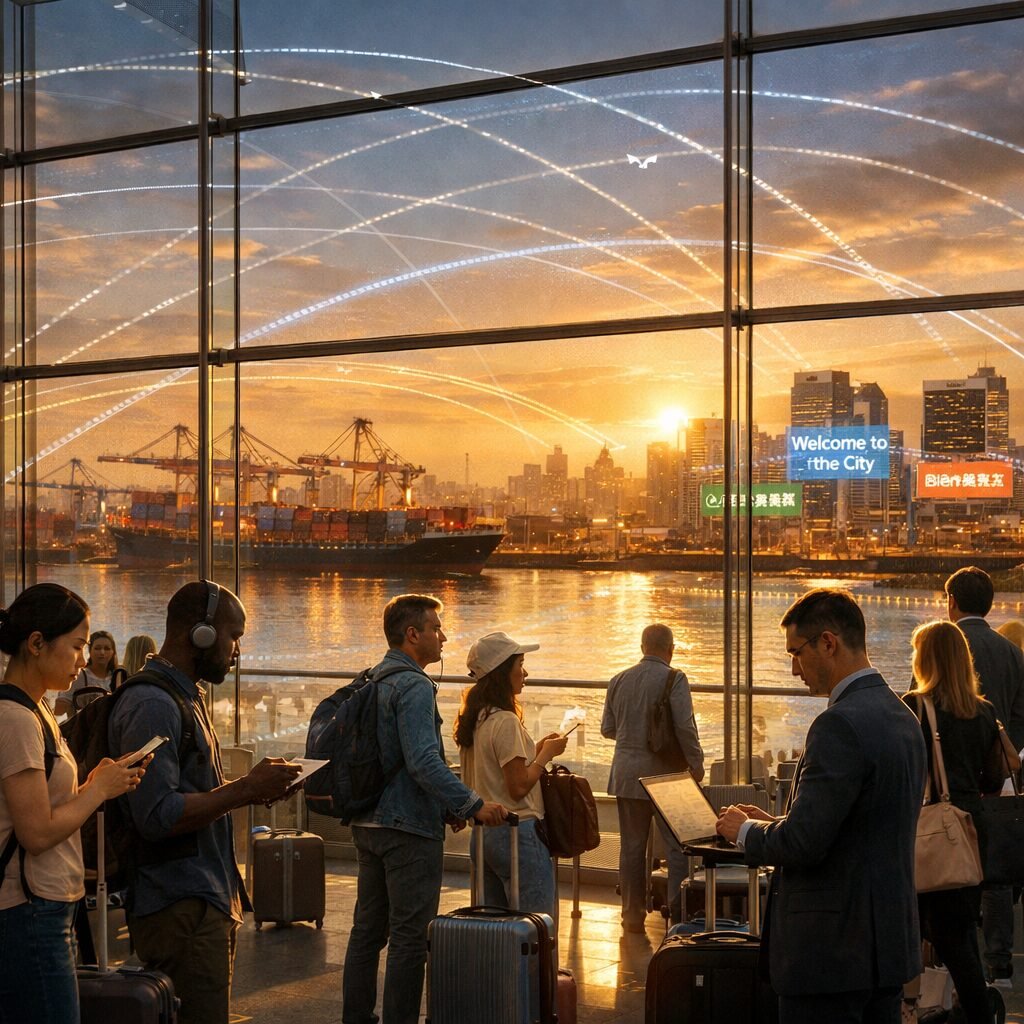
The word “international” once summoned images of diplomats in suits, treaties signed in opulent halls and neat maps showing borders. Today it is better imagined as a tapestry: thousands of distinct threads woven by cities, corporations, platforms, migrants, climate systems and algorithms. This section lays out the central thesis — that the most consequential trends are not simply shifts between countries but the reconfiguration of cross-border life into many overlapping, semi-autonomous layers.
Where nineteenth‑ and twentieth‑century international relations were dominated by nation‑state hierarchies, the twenty‑first century sees horizontal, functional networks rise to parity. Ports and airports still matter, but so do cloud regions, undersea cable landing zones, university consortia and regional climate compacts. Understanding “international” now means reading how these layers intersect, conflict and collaborate in everyday governance and commerce.
Patchwork globalisation: blocs, backyard autarkies and the rise of city‑states
Instead of a single global market, we are witnessing a mosaic of overlapping economic spheres. Trade friction and strategic decoupling have produced ‘patchwork globalisation’ — regional supply chains, selective onshoring, and regulatory arbitrage that favour local hubs. European green industrial clusters, East Asian semiconductor corridors and African single‑commodity value chains all co‑exist but rarely align on rules or norms.
Concurrently, cities are acting like mini‑states. Municipal diplomacy — negotiating transport, data flows and climate resilience directly with foreign peers — is a dominant feature of 2026. Think of Copenhagen striking a battery recycling pact with Singapore, or Lagos joining a digital health network with municipal clinics in São Paulo. These networks bypass national capitals, creating nimble, issue‑specific internationalism.
Algorithmic international: how AI rewrites borders
Algorithms now arbitrate cross‑border life — from visa approvals to loan offers to content moderation. Border control increasingly means automated profiling, identity wallets and risk scores rather than passport stamps. The consequence is a new, data‑based stratification: people and businesses move easily inside some digital ecologies and are effectively excluded from others.
This creates a ‘selective permeability’ of international systems. Corporations can operate globally if they agree to specific AI governance regimes; citizens can travel virtually across cultural products but struggle to gain physical mobility. Governments respond by exporting data rules as soft power: regulatory packages (think digital privacy plus procurement standards) are offered as passport‑like credentials for market access. For further reading on regulation shaping global tech ties, see the EU’s digital rule export strategies and related debates around digital sovereignty.
Micro‑diplomacy: non‑state actors and the decentralisation of foreign policy
Charities, multinationals, universities and even cultural festivals exercise de facto foreign policy. They negotiate relief corridors, strike agreements on research access, and broker energy swaps. This micro‑diplomacy has advantages — speed, technical depth, local legitimacy — but it also fragments accountability.
A striking trend is the professionalisation of these actors: in 2024–26, many large cities and corporations hired ex‑ambassadors to run international units, while NGOs assemble treaty‑level legal teams. The result is a hybrid diplomatic ecosystem where formal treaties coexist with vendor contracts and memoranda between hospitals. These multiple instruments can solve problems faster, yet they complicate crises where only a sovereign’s authority carries weight.
Climate, migration and the new portability economy
Climate shocks have made mobility a core component of international policy. Rather than a single refugee crisis, there are many interlocking flows: seasonal labour shifts, climate relocation corridors, and ‘resettlement zones’ established by regional compacts. Governments and private sponsors now offer tailored mobility products — climate evacuation insurance, cross‑border work licences and portable pensions — turning migration into a commodified, negotiated service.
An emergent market — the portability economy — includes digital identity providers, cross‑jurisdictional insurance pools and credential portability platforms that let professionals transfer licences across borders. These markets are remapping citizenship benefits: some residents in climate‑exposed areas hold multiple contingent legal statuses as a survival strategy.
The geopolitics of infrastructure: cables, chips and the soft geography of power
Hard power remains infrastructural rather than merely military. Control over chip fabrication, rare‑earth processing, satellite constellations and undersea cables has become synonymous with influence. Diplomatic bargaining now revolves around incentives for greenfield plants and agreements for shared satellite data, rather than classical arms deals.
This redistribution of power has a second‑order cultural effect: countries without advanced infrastructure partner through norm‑setting institutions to gain influence. Expect more ‘infrastructure diplomacy’ deals that combine finance, technical assistance and legal alignment to lock in long‑term strategic relations.
Everyday international: culture, sport and the quiet rewiring of identities
Beyond treaties and trade, ordinary life is where international trends take root. Sports leagues that span continents, streaming platforms curating hybrid cultural products, and multinational festivals translate global flows into local practice. These exchanges produce hybrid identities that complicate standard migration narratives and create constituencies for multilateral solutions.
Cultural diplomacy today is less about state pageantry and more about shared practices: joint curricula in universities, co‑produced media, and transnational apprenticeship schemes. Such low‑politics exchanges build durable ties that often outlast elite disputes.
Looking ahead: governance for a stitched world
The central governance question is how to coordinate across layers without returning to monolithic state control. Practical answers include interoperable regulatory modules, binding municipal compacts, and ‘portable governance’ mechanisms that travel with people and services. Effective internationalism in the coming decade will be less about making one global order and more about designing interfaces between many.
Policymakers who succeed will be those who craft incentives for shared standards while preserving experimentation at smaller scales. Civil society and the private sector will remain indispensable partners — but citizens must be given clearer channels to contest and shape the new stitches that bind their lives across borders.