
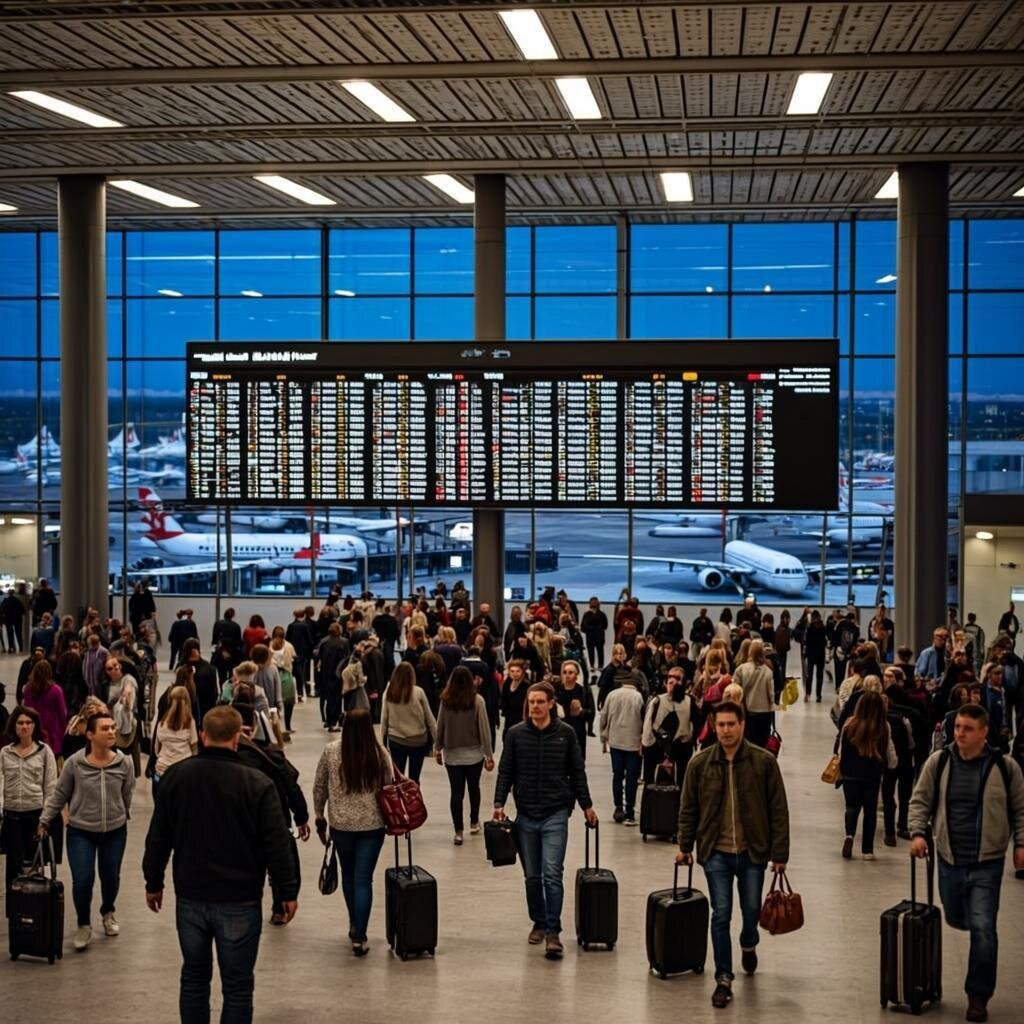
The Word That Means Everything and Nothing
The word ‘international’ appears on everything from airport signage to law degrees, yet its meaning shifts dramatically depending on who utters it. Coined by Jeremy Bentham in 1780, the term was intended specifically to describe law between nations—a narrow, legalistic concept that has since ballooned into a catch-all for anything crossing borders. Today, when a politician speaks of ‘the international community,’ they rarely mean all 195 recognised countries; they usually mean a small cluster of allied Western powers. When a business boasts of ‘international operations,’ it may simply maintain a single office in a neighbouring country. This semantic drift matters because it obscures genuine global realities behind a veneer of universality.
The first myth, then, is that ‘international’ implies inclusivity. In practice, the word is frequently wielded to legitimise the priorities of a select few. When news anchors refer to ‘international outrage’ over a geopolitical event, they are almost always referencing reactions from Washington, London, Paris, and Berlin—rarely from Lagos, Jakarta, or Quito. The term has become a rhetorical device that amplifies certain voices whilst silencing others, all under the guise of global consensus.
Myth One: International Law Operates Like Domestic Law
Perhaps no misconception about the international sphere is more persistent than the belief that international law functions similarly to the law within a nation. Television dramas and headlines about ‘war crimes tribunals’ reinforce the impression of a global justice system with clear rules, enforcers, and consequences. The reality is far messier.
International law is largely consensual. States agree to be bound by treaties, and even then, enforcement depends overwhelmingly on political will. The International Criminal Court, established in 2002, has indicted dozens of individuals, but its reach is limited by the refusal of major powers—including the United States, Russia, and China—to submit to its jurisdiction. When prosecutions do occur, they disproportionately target defendants from Africa, leading to accusations of selective justice.
This does not mean international law is meaningless. It shapes behaviour, establishes norms, and provides mechanisms for dispute resolution that have prevented conflicts from escalating. But understanding it as a robust, enforceable system akin to domestic criminal law is a fundamental error. It is better understood as a set of evolving practices backed by varying degrees of diplomatic and economic pressure.
Myth Two: International Trade Always Benefits Everyone
The post-Cold War consensus held that international trade was a rising tide lifting all boats. Globalisation, we were told, would reduce poverty, spread prosperity, and even dampen the likelihood of war through mutual economic dependence. The myth endures in political rhetoric, but the data tell a more complicated story.
Whilst global trade has lifted hundreds of millions out of extreme poverty—particularly in China and parts of Southeast Asia—the distribution of benefits has been wildly uneven within countries. Manufacturing communities in the American Midwest, the English North, and the French rust belt experienced devastation whilst coastal financial centres flourished. A 2018 study by the Peterson Institute for International Economics found that adjustment assistance programmes for displaced workers reached only a fraction of those affected by trade-related job losses.
Moreover, the assumption that economic interdependence prevents conflict has been thoroughly tested by recent events. Russia and Ukraine maintained extensive trade ties before 2022; Europe depended heavily on Russian gas. Yet war came nonetheless. The international trade system, far from being a neutral engine of prosperity, is deeply political, shaped by power asymmetries and historical legacies of colonial extraction that continue to determine which nations process raw materials and which merely export them.
Myth Three: International Organisations Possess Sovereign Power
The United Nations, the World Health Organisation, the International Monetary Fund—these institutions are routinely described as though they possess independent authority comparable to national governments. Critics accuse them of usurping sovereignty; supporters urge them to act more decisively. Both perspectives rest on a false premise.
International organisations are, by design, creations of their member states. The UN cannot deploy peacekeepers without authorisation from the Security Council, where five permanent members wield veto power. The WHO has no authority to compel nations to share health data or accept pandemic inspectors. The IMF’s leverage comes not from legal supremacy but from the fact that it holds purse strings that struggling economies desperately need.
This does not render them toothless. The WHO’s declaration of a Public Health Emergency of International Concern carries enormous moral and practical weight. The IMF’s policy prescriptions have reshaped economies from Argentina to Greece. But the power flows from member states, not to them. When the international community fails to act—whether in Rwanda in 1994 or Syria in the 2010s—the failure lies not with bureaucratic inertia in Geneva or New York, but with the governments that chose not to act.
Myth Four: ‘International’ Means Governments Only
Ask someone to name an international actor, and they will likely cite a president, a foreign minister, or perhaps a diplomat. The myth that international affairs is exclusively the domain of states persists despite overwhelming evidence to the contrary. In reality, the most consequential international actors of the past decade have been non-state entities.
Multinational corporations move capital and shape policy across borders with more agility than most foreign ministries. Apple’s annual revenue exceeds the GDP of over 160 countries. When Google decides where to locate data centres or how to handle user data across jurisdictions, those choices have geopolitical implications. Non-governmental organisations like Médecins Sans Frontières deliver healthcare in conflict zones where governments cannot or will not operate. Transnational criminal networks move illicit goods worth hundreds of billions annually, whilst terrorist organisations and hacker collectives project power without regard for borders.
Even individuals operate internationally in ways unimaginable a generation ago. A software developer in Bangalore collaborates daily with colleagues in Berlin and São Paulo. A social media influencer in Seoul shapes consumer behaviour in Stockholm. The international sphere is no longer—if it ever was—a chessboard of states alone. It is a dense, chaotic web of actors with wildly varying degrees of accountability.
Rethinking the International
If these myths share a common thread, it is the tendency to impose domestic expectations on a fundamentally different realm. We want international law to deliver justice like a national court, international trade to distribute gains like a fair tax system, international organisations to govern like elected parliaments, and international relations to be conducted by accountable officials. The international sphere satisfies none of these desires, and pretending otherwise leads to disillusionment and poor policy.
A more honest understanding begins with accepting the international as a space of negotiation rather than governance, of norms rather than laws, of asymmetric power rather than democratic legitimacy. This is not a counsel of despair. International cooperation has achieved remarkable things: the eradication of smallpox, the healing of the ozone layer, the reduction of nuclear arsenals. But these achievements came not from a functioning global government, but from painstaking diplomacy, strategic pressure, and the patient construction of trust between deeply imperfect actors.
The word ‘international’ will continue to be used loosely, often manipulatively. But those who understand its true nature—contested, contingent, and perpetually under construction—are better equipped to engage with the world as it is rather than as we might wish it to be.