
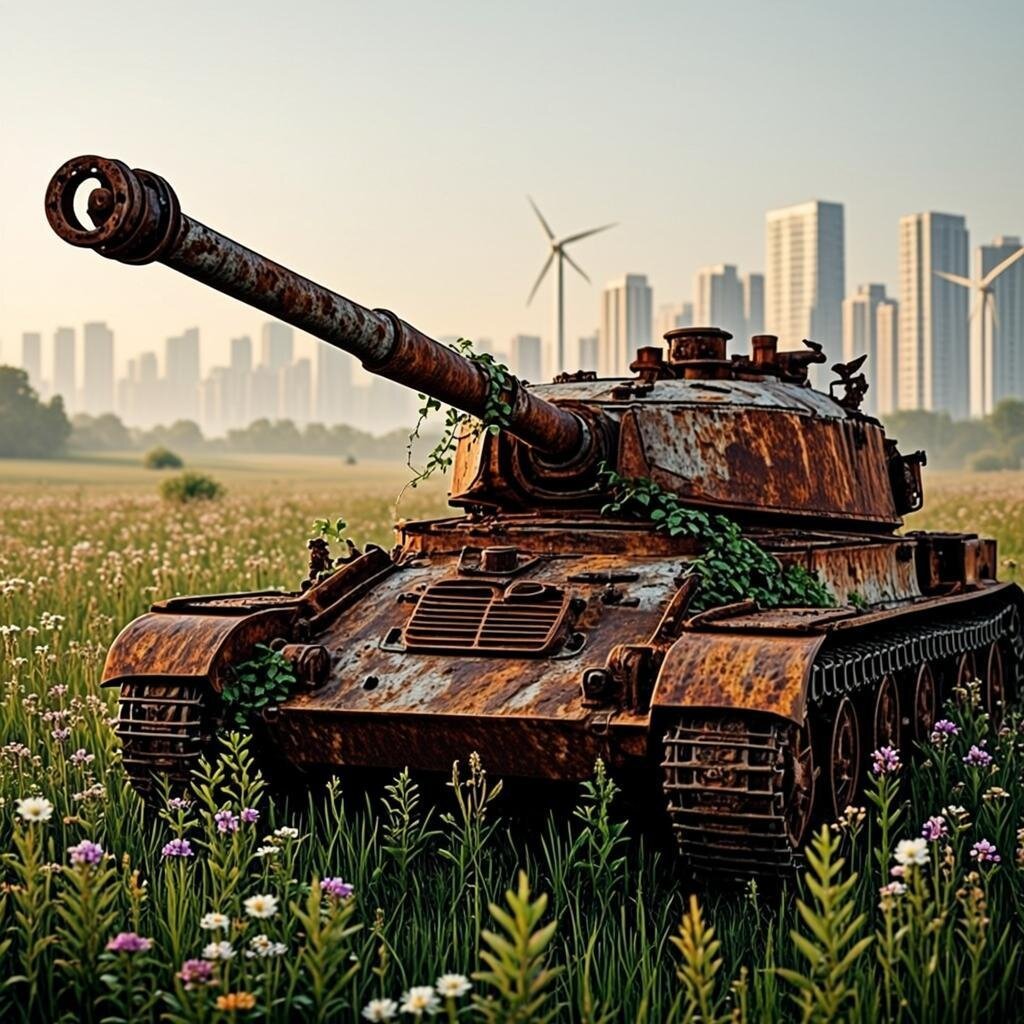
The Legacy System Nobody Asked For
We’ve all been there. You’re clinging to an outdated model because it’s familiar, because your predecessors used it, because—frankly—you’ve invested so much in it that walking away feels like admitting defeat. But here’s the uncomfortable truth: sometimes your war has simply passed its sell-by date. It’s clunky, inefficient, and frankly embarrassing to still be seen with in 2026.
War, as a product, hasn’t had a meaningful update in decades. The core functionality—organised violence between groups—remains largely unchanged since the mid-20th century. Sure, there have been patches: drones here, cyber operations there. But the underlying architecture is creaking, and the user experience is, to put it mildly, atrocious. According to recent analysis from the International Institute for Strategic Studies, global military expenditure exceeded $2.4 trillion in 2024, yet the return on investment for actual security outcomes has never looked more dubious.
Sign One: Your Enemies Keep Changing the Passwords
One of the clearest indicators that your war needs replacing is when the adversary you originally designed it for no longer exists in any recognisable form. The United States spent two decades fighting in Afghanistan against an enemy that evolved, mutated, and ultimately returned to power. The war was built for a different era, a different threat model, and a different set of assumptions about how power works.
This is the military equivalent of trying to run 2026 software on a 2001 operating system. The original justification—hunting al-Qaeda leaders—became nation-building, then counterinsurgency, then something vaguely resembling perpetual occupation. Each pivot was an admission that the original war had become obsolete, yet rather than replacing it, leaders simply applied fresh coats of rhetorical paint.
When your war’s founding rationale no longer maps onto reality, you’re not fighting a war anymore. You’re maintaining a zombie conflict—technically alive, but devoid of purpose or direction.
Sign Two: The Maintenance Costs Are Bankrupting You
Modern war is extraordinarily expensive, and not just in the obvious ways. A Brown University Costs of War project estimates that America’s post-9/11 wars will ultimately cost more than $8 trillion once veterans’ care is fully accounted for. That’s a staggering sum for outcomes that range from ambiguous to actively counterproductive.
But the costs extend beyond money. There’s the opportunity cost—what else could those resources have funded? There’s the human cost: thousands of service members killed, many more wounded, and a veteran suicide rate that constitutes its own quiet catastrophe. There’s the diplomatic cost: alliances strained, soft power squandered, moral authority eroded.
When the upkeep on your war exceeds any plausible benefit from continuing it, you’ve reached the moment every consumer faces: do you keep pouring money into repairing a lemon, or do you cut your losses and explore alternatives?
Sign Three: Nobody Makes Parts for It Anymore
The international system that made traditional wars somewhat legible—declarations, front lines, uniformed combatants, Geneva Convention protections—has been breaking down for years. Today’s conflicts blur into proxy wars, hybrid operations, cyber campaigns, and grey-zone activities that don’t fit neatly into any existing legal or operational framework.
Russia’s invasion of Ukraine initially looked like a conventional war, but quickly became something stranger: a conflict fought with consumer drones, satellite internet, open-source intelligence, and Western weapons systems operated by a non-NATO country. The old models don’t accommodate this reality. As researchers at RUSI have documented, the character of warfare is changing faster than the institutions designed to manage it.
When the infrastructure supporting your war becomes obsolete—when international law can’t classify what’s happening, when militaries can’t define victory, when the public can’t even follow what’s occurring—you’re dealing with a product whose ecosystem has collapsed around it.
Sign Four: The Reviews Are Brutal
Public opinion is the ultimate review system, and war’s ratings have been declining for decades. Vietnam shattered American trust in military adventurism. Iraq and Afghanistan finished the job across much of the Western world. In Britain, the Chilcot Inquiry’s devastating 2016 verdict on the Iraq War confirmed what millions had suspected: the case for war was built on flawed intelligence, inadequate planning, and questionable motives.
This matters because wars require domestic consent to sustain. When populations no longer believe their leaders’ justifications, when military service becomes something elites avoid whilst sending others to fight, when the gap between official narratives and observable reality grows too wide—the war has lost its social licence to operate.
No product survives indefinitely when its customer satisfaction ratings are in freefall. Wars are no different.
The Upgrade Path: What Replaces War?
Here’s where things get interesting. The alternative to outdated war isn’t naïve pacifism—it’s recognising that security in the 21st century requires different tools for different problems. Climate-driven migration, pandemics, cybercrime, nuclear proliferation, and economic instability kill more people and threaten more societies than conventional military conflict, yet receive a fraction of the attention and resources.
Diplomacy, intelligence cooperation, economic statecraft, and international institution-building aren’t soft alternatives to war. They’re upgrades—more efficient, more sustainable, and more aligned with the actual threats facing modern societies. The United Nations, despite its well-documented flaws, has presided over a world where interstate war has become remarkably rare. That’s not coincidence; it’s evidence that the old product can be partially retired.
None of this means conflict disappears. Human beings will continue to disagree violently. But continuing to rely on a model of warfare designed for a world that no longer exists isn’t toughness or realism—it’s institutional inertia dressed up as strategy. The truly hard-headed approach is looking honestly at what works, what doesn’t, and having the courage to decommission what’s failed.
Knowing When to Let Go
Every generation believes its wars are necessary and unique. The First World War was supposed to be the war to end all wars. The Second World War was the good war. The Cold War was the existential struggle. Each time, the framing was designed to foreclose debate, to make questioning the war equivalent to questioning civilisation itself.
But the mark of a mature society is the ability to audit its commitments honestly. To ask: is this working? Is it making us safer? Is there a better way? These aren’t unpatriotic questions—they’re the questions any competent leader should ask of any programme consuming vast resources and human lives.
War had its era. It may still have limited, specific applications in extreme circumstances. But as a default response to international problems, as a go-to tool for projecting power and resolving disputes, it’s overdue for replacement. The signs are everywhere. The only question is whether we’ll read them honestly—or keep running obsolete software until the whole system crashes.