
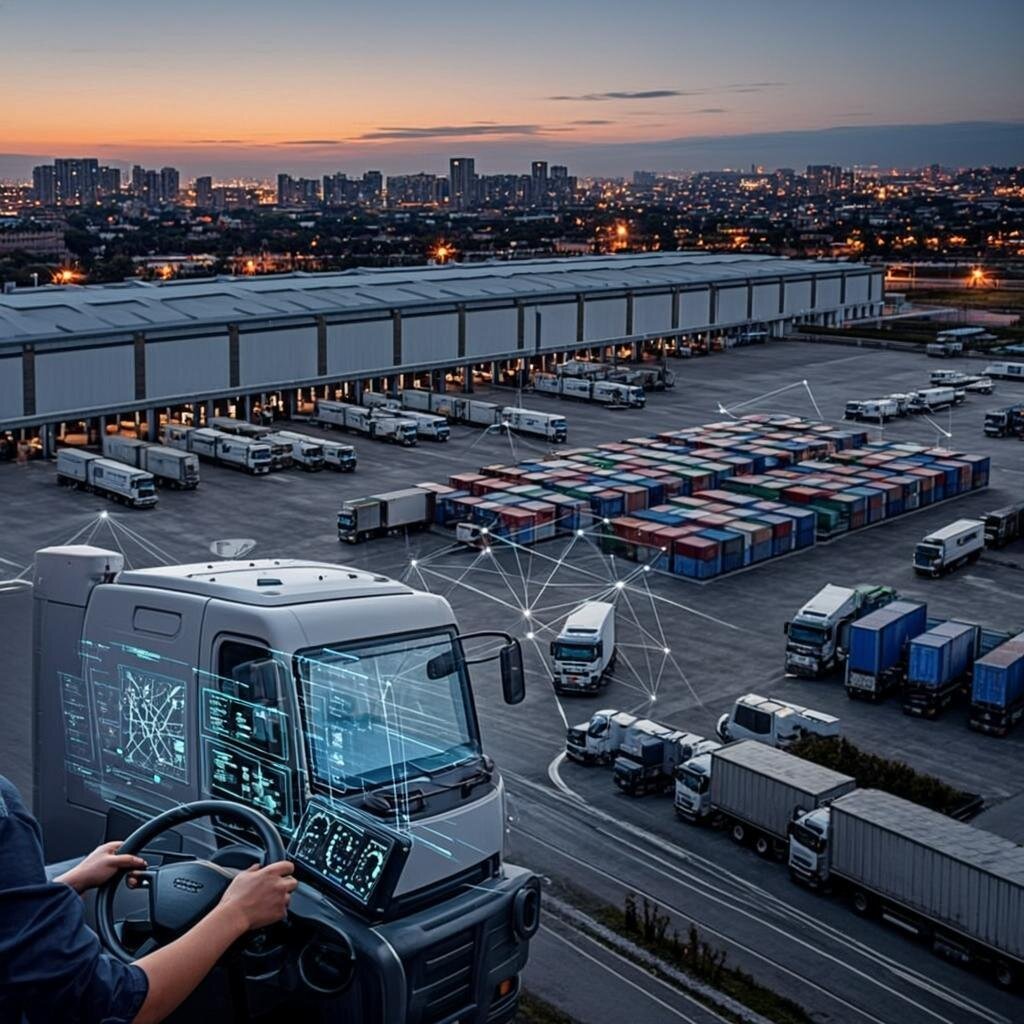
The Truck Maker That Became a Tech Company
Walk into any logistics conference in 2026 and you will hear the same buzzwords repeated ad nauseam: electrification, autonomy, supply chain resilience. But beneath the familiar chatter, something far more interesting is happening. International, the 123-year-old commercial truck manufacturer once synonymous with diesel engines and agricultural machinery, has spent the last several years executing a transformation so subtle that most industry observers have barely noticed it. The company is no longer simply building trucks. It is building an ecosystem.
The pivot began in earnest around 2022, when International’s parent company Navistar finalised its integration with TRATON GROUP and signalled a strategic shift that went beyond the usual corporate restructuring. Rather than competing solely on horsepower and payload capacity, International started investing heavily in data infrastructure, predictive analytics and connected fleet services. The goal was audacious: transform the humble lorry from a mechanical workhorse into a rolling data platform that generates value long after it leaves the showroom.
‘Trucks used to be sold as one-time transactions,’ explains Dr Helena Marsh, a transport logistics researcher at the University of Leeds. ‘What International is doing is turning them into subscription-enabled service nodes. That fundamentally changes the business model of commercial road transport.’ The implications are profound. A fleet operator who once judged a truck by its fuel efficiency now evaluates it by the quality of its telemetry, the accuracy of its predictive maintenance algorithms and the seamlessness of its integration with warehouse management systems.
The Connected Cab: Software Eating the Highway
International’s OnCommand Connection platform, which has been evolving steadily over the past decade, now serves as the digital nervous system for thousands of fleets across North America and beyond. But what makes this genuinely surprising is not the technology itself, which is becoming industry standard, but rather how International has positioned it as the centrepiece of its commercial offering rather than a value-added afterthought.
The company’s most recent generation of trucks ships with over 200 sensors monitoring everything from tyre pressure to driver eye movement. This data feeds into machine learning models that can predict component failures weeks before they occur, optimise routing in real time based on traffic and weather conditions, and even flag patterns of driver fatigue before they become dangerous. In an industry where unplanned downtime can cost upwards of £1,500 per day per vehicle, this predictive capability translates into serious money.
What is truly unexpected, however, is how International has opened this data architecture to third-party developers. By creating an application programming interface ecosystem around its connected vehicle platform, the company has effectively turned its trucks into the equivalent of smartphones on wheels. Independent software developers can now build fleet management applications that plug directly into International’s data stream, creating a marketplace of specialised tools that no single manufacturer could build alone. It is a strategy that borrows more from Apple’s App Store playbook than from anything traditionally associated with heavy industry.
Unlikely Bedfellows: Partnerships That Raise Eyebrows
Perhaps the most visible sign of International’s unexpected transformation is the curious collection of partnerships it has cultivated. In 2024, the company announced a collaboration with TuSimple’s successor entity to develop autonomous trucking corridors between major logistics hubs. But more surprising was its 2025 partnership with a European renewable energy startup to co-develop hydrogen fuel cell integration kits for existing diesel fleets, a move that essentially allows operators to retrofit rather than replace.
Then there is the partnership that genuinely caught the industry off guard: International’s collaboration with a major behavioural science institute to redesign the driver experience from a psychological perspective. Rather than simply adding comfort features, the initiative studies how cabin design, ambient lighting, noise profiles and even seat vibration patterns affect driver alertness, mood and long-term retention. Initial findings suggest that drivers operating the redesigned cabins report 23% lower stress levels and show measurably improved reaction times during night driving.
‘The driver shortage is the single biggest existential threat to road freight,’ notes Marcus Pemberton-Hayes, a freight industry analyst based in London. ‘International is one of the few manufacturers treating the driver as a user experience problem rather than a labour market problem. That is a genuinely novel approach.’ The company has also partnered with vocational training organisations to create immersive virtual reality training programmes, addressing the skills gap while simultaneously gathering data on driver behaviour that feeds back into vehicle design.
Electrification Without the Hype
Whilst competitors have spent years making headlines with flashy electric truck unveilings, International has taken a markedly different approach. Its electric vehicle programme, built around the eMV series, has progressed quietly but with a stubborn pragmatism that prioritises real-world operability over press coverage. The trucks are designed not as technological showpieces but as functional tools for specific use cases: last-mile delivery, regional distribution and depot-to-depot shuttles.
What sets International apart is its holistic approach to electrification infrastructure. Rather than simply selling electric trucks and leaving operators to figure out charging, the company has developed a consulting service that analyses a fleet’s actual duty cycles, depot layouts and energy contracts to determine whether electrification makes economic sense at all. In some cases, the recommendation is to wait. This honesty has earned International surprising credibility among fleet managers who have grown weary of unrealistic promises from manufacturers chasing environmental credentials.
The company’s battery-agnostic architecture is another unexpected innovation. Rather than locking customers into a single battery chemistry or supplier, International has designed its electric platforms to accommodate multiple battery types that can be swapped as technology evolves. This future-proofing strategy acknowledges a reality that most manufacturers prefer to ignore: battery technology is still improving rapidly, and today’s state-of-the-art pack will be obsolete within five years.
The Human Equation: Drivers as Data Partners
Perhaps the most genuinely unexpected aspect of International’s transformation is its evolving relationship with the people who actually drive its trucks. For decades, the commercial vehicle industry treated drivers as necessary but somewhat inconvenient components in a logistics equation. International’s connected platform has begun to reframe drivers as active data partners whose behavioural insights are valuable intellectual property.
The company’s Driver Insight Programme, launched in late 2025, allows drivers to opt into a system that tracks their driving patterns and provides personalised feedback designed to improve fuel efficiency and safety. But crucially, drivers who participate receive a share of the fuel savings generated by their improved performance. It is a small but radical idea: treating the driver as a stakeholder in the vehicle’s operational efficiency rather than merely an operator of it.
Early results have been striking. Fleets participating in the programme have reported fuel efficiency improvements of 8 to 12 per cent, alongside significant reductions in insurance premiums due to improved safety metrics. More importantly, driver retention rates among participants have jumped by nearly 30 per cent, addressing the industry’s chronic turnover problem through a combination of financial incentive and professional recognition. ‘When you treat drivers as partners in optimisation rather than variables to be monitored, you unlock a reservoir of practical knowledge that no algorithm can replicate,’ says Marsh.
What the Quiet Revolution Means for the Road Ahead
International’s transformation offers a case study in how legacy industrial companies can reinvent themselves without abandoning their core competencies. The company has not stopped building trucks. It has simply redefined what a truck is: no longer a standalone machine but a node in a connected network of data, services and human expertise. This redefinition has implications that extend far beyond International’s own balance sheet.
The commercial vehicle industry has historically been dominated by a handful of global manufacturers competing on largely similar terms. International’s platform play threatens to upend this equilibrium by making the truck itself almost incidental to the services and data ecosystem surrounding it. If the value lies in the software, the analytics and the driver partnership programme, then the barriers to entry shift dramatically. A nimble newcomer with superior algorithms and a compelling driver experience could theoretically compete with established giants by leveraging commodity hardware.
There are risks, of course. International’s data-centric strategy makes it vulnerable to cybersecurity threats in an industry that has historically been lax about digital security. The company’s open API approach, whilst fostering innovation, also creates quality control challenges that could erode brand trust if third-party applications perform poorly. And the transition from transactional sales to recurring service revenue requires a fundamental retraining of dealer networks that have spent decades selling iron rather than software.
Yet the direction of travel seems clear. As autonomous technology matures and electrification becomes mainstream, the competitive battleground will shift decisively towards software, data and services. International, by making this shift early and quietly, has positioned itself not as a truck manufacturer that dabbles in technology but as a technology company that happens to make trucks. In an industry where the unexpected is now the only constant, that distinction may prove to be everything.