
When ‘International’ Becomes a Climate Conveyor Belt
The word ‘international’ often invokes diplomacy, trade negotiations and flights criss-crossing the globe. Yet one of its most consequential and least visible meanings today is as a conveyor belt for environmental impacts: embodied emissions, waste, biodiversity loss and regulatory arbitrage that flow across borders like invisible commodities.
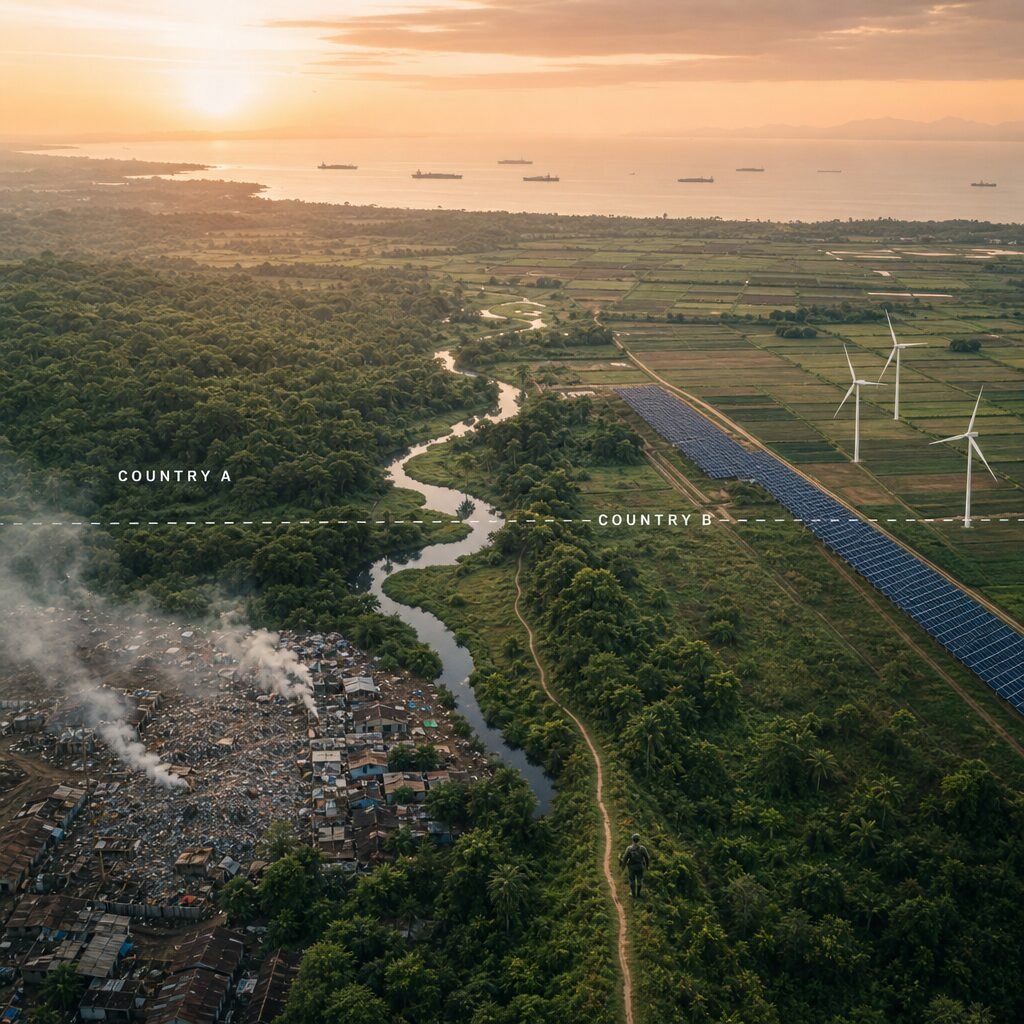
From container ships laden with cheap goods to financial instruments that shift forest protection from local stewardship to fungible carbon credits, international systems reorganise where environmental harm happens. That reorganisation is not random. It reflects power imbalances—where wealthier countries export pollution, and poorer nations inherit rubbish, debt and depleted ecosystems. Understanding ‘international’ through this conveyor-belt lens reframes sustainability as a geopolitical as much as an ecological problem.
Transboundary Trash: Recycling to the Rescue—or the Reverse?
For decades, richer countries shipped plastic and electronic waste to lower-income regions under the promise of recycling. The reality has often been informal recycling yards, toxic backyard burning and leaking heavy metals into rivers and food chains. Ghana’s Agbogbloshie and parts of Southeast Asia became emblematic of how ‘green’ consumption in one place can generate pollution in another.
Recent changes—China’s 2018 National Sword policy and tightening EU waste rules—have disrupted these flows, forcing exporters to reckon with domestic processing. But the adjustment has also accelerated informal trade routes and illicit dumping. The sustainability challenge here is not merely technical (better sorting or cleaner incineration) but legal and diplomatic: harmonising standards, funding safe recycling infrastructure where waste ends up, and ensuring multinational producers share responsibility via extended producer responsibility schemes or international agreements.
Carbon Borders, Trade Wars and the New Environmental Realpolitik
Carbon Border Adjustment Mechanisms (CBAMs) and green tariffs are turning climate policy into trade policy. Designed to prevent carbon leakage—relocating emissions-intensive production to countries with looser climate rules—CBAMs force an internationalisation of carbon accounting and compliance. They are a nascent form of environmental diplomacy: a country’s climate ambition becomes a trade barrier.
But CBAMs carry geopolitical risks. Developing economies argue they could become de facto punitive measures that constrain industrialisation unless paired with finance and technology transfers. The surprising pivot here is that sustainability instruments meant to harmonise environmental cost are morphing into levers of economic influence. Effective international sustainability, therefore, will require pairing carbon adjustments with generous climate finance, capacity building and transparent multilateral governance to avoid legitimising a new form of eco-protectionism.
Cross-border Corridors: Reconnecting Ecosystems to Fix International Problems
Biodiversity doesn’t respect borders, yet most conservation is national. A growing movement argues for ‘transboundary conservation corridors’—large-scale ecological networks that reconnect habitats across frontiers, from the Amazon Basin’s riparian mosaics to temperate steppe belts in Eurasia.
These corridors do more than preserve species; they stabilise carbon stores, buffer communities against climate extremes and reduce cross-border resource conflict. Operationalising them demands new international instruments: shared monitoring, joint ranger units, benefit-sharing schemes and conflict-sensitive conservation models. Where successful, transboundary corridors convert ‘international’ from a vector of harm into infrastructure for planetary resilience.
International Finance, Local Agency and the Ethics of Green Investment
Sustainability finance—green bonds, blended finance, carbon markets—has gone global. Yet the flows often privilege rapid project deployment over local rights. Forest carbon projects can deliver emissions credits to corporations in distant capitals while displacing Indigenous communities or curbing traditional land uses.
A genuinely international approach to sustainability must centre local agency and legal pluralism. That means conditionally tying finance to Free, Prior and Informed Consent (FPIC), creating grievance mechanisms that cross jurisdictions, and rethinking ownership of environmental assets so benefits are shared equitably. International funds should be measured not just by megatonne reductions but by how they redistribute decision-making and livelihoods back to the places most affected.
From Headlines to Habits: Rethinking Global Citizenship for the Planet
The environmental angle of ‘international’ invites a shift from grand summits to everyday cross-border ethics. It asks citizens, companies and states to recognise that our carbon footprints, consumption patterns and regulatory choices have extraterritorial consequences. Curbs on single-use plastics in one city mean little if production and disposal are outsourced; ambitious net-zero plans are hollow if they export emissions.
Practically, this implies tighter supply-chain transparency, enforceable transnational corporate accountability, and investment in shared global public goods—data commons, cross-border monitoring satellites and legally binding standards for environmental trade. The surprising but hopeful insight is that ‘international’ can be repurposed: from a mechanism that concentrates environmental harm to a distributed architecture that shares responsibility, resources and rights across borders.