
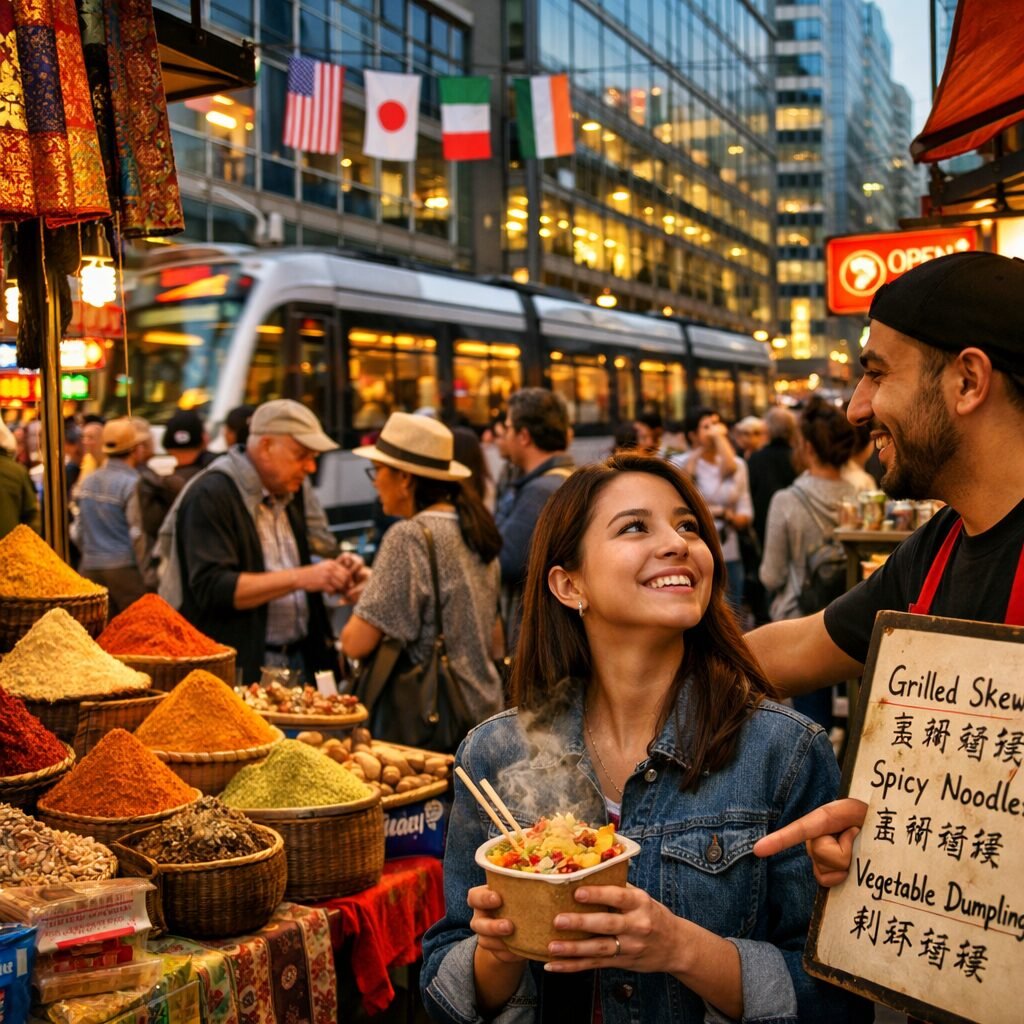
Foreignness as a Psychological Lure: A Starting Point
The word “International” operates like a psychological magnet: it suggests movement beyond the familiar, a promise of difference wrapped in the safety of an established label. For many, the draw is not merely the content of other countries—the cuisine, languages, art—but the cognitive sensation of calibrated otherness. That sensation is pleasurable because it sits between two states: predictability and surprise. Cognitive scientists call this the “optimal novelty” window, where stimuli are different enough to excite curiosity but not so alien as to trigger anxiety.
This liminal space explains why international festivals, foreign films with subtitles, and global brands resonate. They offer novelty that can be mentally mapped onto existing frameworks—allowing the brain to enjoy learning without reorganising its entire worldview. The attraction to the international is thus partly a hedonic judgement: it feels good to expand your map just enough to feel competent, cosmopolitan and curious.
Evolutionary Threads: Why the Global Appeals
Evolutionary psychology supplies another layer. Human beings evolved as both tribal and exploratory creatures. Early hominins who ventured beyond known territories gained access to new resources, mates and alliances; those who stayed put risked stagnation. The modern analogue of that push–pull lives on: we are wired to evaluate foreignness as opportunity.
That ancient circuitry translates into modern behaviours—seeking international experiences signals adaptive flexibility. In uncertain times, the appeal of international news, products or partners can be read as a subconscious hedge against local precarity: diversifying one’s cultural diet is, at a psychological level, a way of diversifying future options.
Identity Crafting: International as Self-Extension
Adopting international tastes or affiliations is often less about other countries than about self-fashioning. People use global markers—languages, travel photographs, music playlists—to communicate a persona: worldly, open-minded, sophisticated. These markers operate like identity affordances: they let individuals extend their self-concept into a transnational realm without uprooting their lives.
Psychologically, this is empowering. It allows individuals to rehearse alternative selves—polyglot, expatriate, globetrotter—within the safety of their daily routines. The international becomes a toolkit for identity experimentation, especially valuable in societies where traditional markers of status are in flux.
Aesthetic Psychology: Why Accents, Design and Food Fascinate
Aesthetics play a crucial role. Accent, typography, packaging, colour palettes and flavour profiles from elsewhere trigger sensory registers that feel fresh. The brain takes pleasure in pattern recognition; when a novel pattern emerges from a foreign aesthetic, it rewards the viewer with dopamine. This neuromarketing dynamic explains the boom in “international” sections of supermarkets and the popularity of global fusion in design and fashion.
There is also a texture economy: certain senses—smell and taste especially—are tightly bound to memory and emotion. International cuisines can therefore bypass rational filters and evoke powerful affective responses, creating quick attachments that feel intimate despite their foreign origin.
Risk, Novelty and the Thrill of the Borderless
Some draws to the international relate to thrill-seeking. Travelling, consuming foreign media, or dating across cultures all involve manageable risks—misunderstanding, embarrassment, minor failure—that stimulate the same neurochemicals as adventure sports. For many, the psychology of international engagement is about deliberately flirting with the unknown in a contained way.
This dynamic also explains why missteps can become cherished stories: the social currency of a near-miss on a trip or a language blunder is disproportionately high because it signals courage, curiosity and the ability to take and narrate risk.
Social Signalling and Status: Globalism as Currency
Internationalism is also a conspicuous form of signalling. In social contexts, foreign experience communicates resources—time, money, education—and traits like openness and adaptability. In a world where social hierarchies are increasingly subtle, international credentials become legible proofs of distinction.
Importantly, this signalling has two faces: inclusive and exclusionary. Inclusive internationalism opens networks and empathy; exclusionary internationalism becomes a form of gatekeeping, where global indicators are weaponised to assert cultural capital. The psychology here is about in-group formation: international markers delineate who belongs to a cosmopolitan tribe and who does not.
Digital Curatorship: How the Internet Amplifies Desire for the International
The internet has compressed distance, creating a constant marketplace of foreign images, sounds and stories. Platforms curate international content to maximise engagement, exploiting our appetite for novel culture while packaging it into easily digestible formats. Algorithms favour the exotic and the familiar simultaneously, turning global culture into a personalised feed.
This curatorship reshapes psychological consumption: people can now curate their own international identity without leaving home. The cost is that the experience often becomes decontextualised—pleasurable but shallow—prompting questions about authenticity and the long-term psychological effects of living in an endlessly mediated global village.
Practical Implications: Designing Better International Experiences
Understanding the psychology behind the attraction to international can inform better design—of travel, education, media and business. Experiences that balance novelty with navigable structure, that offer narrative scaffolding and social learning, will satisfy the optimal novelty window and foster durable engagement.
Practically, this means creating opportunities for guided cultural immersion, emphasising language learning that builds confidence, and designing digital platforms that add context rather than just spectacle. Such approaches convert fleeting fascination into sustained cross-cultural competence.
Concluding Thought: International as an Ongoing Psychological Project
The appeal of the international is not a single motive but a constellation: evolutionary appetites, identity work, aesthetic pleasure, risk management and social signalling all intersect. Rather than a static category, “International” is a psychological project people undertake to enlarge possibility, perform identity and satisfy curiosity.
Recognising this complexity allows us to engage with global culture more intentionally—seeking depth over novelty, connection over cred, and empathy over mere collection. In doing so, internationalism becomes less a label and more a cultivated habit of mind.