
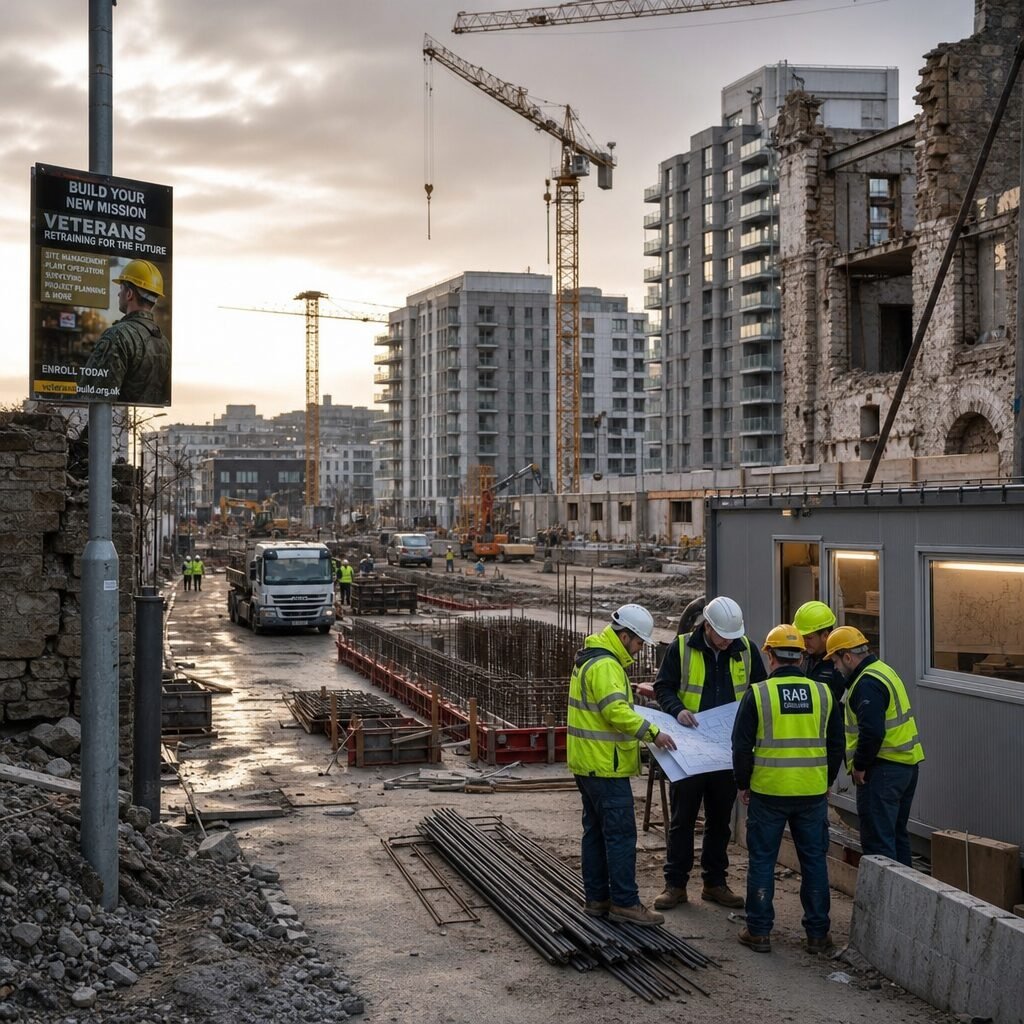
A counterintuitive premise: when war becomes a utility
The opening claim is uncomfortable: in certain measurable ways, war has been a brute-force mechanism for saving time, money or effort. This is not a paean to violence, nor an attempt to argue that the ends justify the means. Rather, it is an attempt to examine the structural logics that have allowed conflict—by imposing extreme constraints—to produce shortcuts, consolidate systems and accelerate decisions that peacetime politics rarely achieve.
History furnishes recurring examples. From the factory floors of 1940s Britain to the satellite-enabled logistics of recent campaigns, the pressures of conflict have compressed decision cycles and reallocated resources in ways that produce outcomes normally reached only after long, incremental processes. The unpleasant truth is that some of those outcomes later diffuse into civilian life as apparent efficiencies.
Scarcity as an engine of rapid innovation
Wartime scarcity is a powerful driver of invention. Faced with shortages of metal, fuel or labour, governments and firms are forced to find substitutes or entirely new methods of production. The classic case is World War II: shortages of natural rubber and metals led to synthetic alternatives and new material sciences. Those substitutes later migrated into consumer products, often cheaper or easier to scale than previous options.
This pressure-cooker environment shortens experimentation cycles. Prototype, test, iterate—then scale. Military procurement funnels large sums into a single problem, reducing the market friction that typically slows innovation. Technologies such as radar, jet engines and early computers moved from curious research into mass production because wartime funding and deadlines eliminated many bureaucratic obstacles. After the conflict, civilian sectors reap the time- and cost-saving benefits when these technologies are adapted for commercial use.
Standardisation and economies of scale
War’s need for interoperability creates standards that persist beyond the battlefield. When armies adopt a single type of ammunition, vehicle part or communication protocol at scale, manufacturers consolidate supply chains and manufacturing lines. The result: lower unit costs and simplified maintenance regimes.
Consider the modern global positioning system. Born of military necessity, GPS became a de facto standard for navigation, enabling entire industries—logistics, ride-sharing, precision agriculture—to build systems that save time and money by relying on a single, ubiquitous reference. The shift from diverse, incompatible solutions to standardised platforms reduces redundancy and the effort needed to integrate systems across organisations.
Mass mobilisation as industrial accelerant
Mobilising millions of people and vast resources is an organisational feat that shows how rapid scaling can be achieved. In wartime, recruitment, training and deployment are compressed into months rather than years. That same model teaches peacetime institutions how to scale programmes quickly: emergency public health responses, disaster relief and even large-scale infrastructure projects borrow techniques first honed in military mobilisation—centralised coordination, prioritised supply lines and simplified decision hierarchies.
The downside is obvious: the human cost and ethical implications are profound. Yet, from a purely operational perspective, the mechanics of wartime mobilisation demonstrate how reallocating authority and simplifying approval processes can drastically reduce lead times and managerial overhead.
Destruction as a form of reset and urban efficiency
This is a grim and controversial insight: destruction sometimes creates an opportunity to rebuild more efficiently. Cities ravaged in war have been rebuilt with modern planning principles, new infrastructure and fewer legacy constraints. Post-war reconstruction can remove outdated urban forms—narrow streets, inefficient utilities—and replace them with grids, zoning and mass transit that reduce travel time and operating costs over decades.
Look at the reconstruction of parts of Rotterdam or post-war reconstruction projects in Japan. The blank slate allowed planners to introduce technologies and layouts that would have been politically and financially infeasible to retrofit piecemeal. Again, the moral calculus is complex: efficiency attained through violence is not a justification, but it is an observable mechanism of change.
Bureaucratic streamlining: wartime permission to break rules
War routinely permits rule-breaking in the name of expediency. Emergency procurement rules, fast-tracked approvals and cross-agency command structures bypass the slow churn of normal governance. That temporary suspension of red tape shows how much time and cost are tied up in procedures designed for risk aversion rather than rapid response.
After conflicts, some of those procedural lessons are institutionalised: rapid contracting vehicles, emergency funding lines and joint-task authorities. The UK’s wartime Civil Contingencies patterns reappear in peacetime emergency legislation and public–private partnership frameworks—tools that, when used judiciously, reduce the friction and expense of responding to crises.
Skilled transfer: veterans, trades and tacit knowledge
War produces cohorts with highly practical, mission-oriented skills. Veterans bring logistics, systems thinking and hands-on technical experience into civilian industries. Those skills often streamline operations: ex-military managers impose tighter schedules, crews trained under battlefield conditions are adept at troubleshooting under pressure, and ex-defence engineers bring rigorous maintenance practices that reduce downtime and cost.
Vocational training programmes that absorb veterans can therefore be a cost-effective source of talent for sectors struggling with skill shortages. The transfer of tacit knowledge—from field expedients to workshop best practice—represents a subtle, long-term efficiency dividend that societies rarely quantify.
The moral ledger and the corrosive costs
Any exploration of ‘savings’ wrought by war must balance technical observations with ethical accounting. Time, money and effort gained through conflict are paid for in lives, trauma, displacement and long-term social fracture. Many efficiencies are temporary or concentrated in particular classes or industries while costs are externalised onto civilians, veterans and future generations.
Acknowledging the functional mechanisms by which war produces efficiencies does not normalise it. Rather, it offers a sober lesson: the processes that reduce friction under duress—clear leadership, standardisation, rapid funding—can and should be replicated in peacetime through democratic, humane means. If the same time- and cost-savings are possible without violence, that is the path societies must pursue.
Conclusion: lessons for peacetime policy
The paradox is useful. War illustrates extreme organisational responses to scarcity and urgency, spotlighting which systems are wasteful and which reforms could be pursued peacefully. Governments and businesses can learn to adopt wartime efficiencies—focused investment, simplified procurement, skills transfer and standards—while avoiding the human devastation that creates them.
That translation requires political will: conscious choices to prioritise long-term resilience over short-term comfort, to invest in workforce transitions and to legislate the accountable use of emergency powers. The aim should be to harvest the pragmatic lessons while ensuring the moral and human costs remain forever unacceptable.