
When Tactical Became Lifestyle
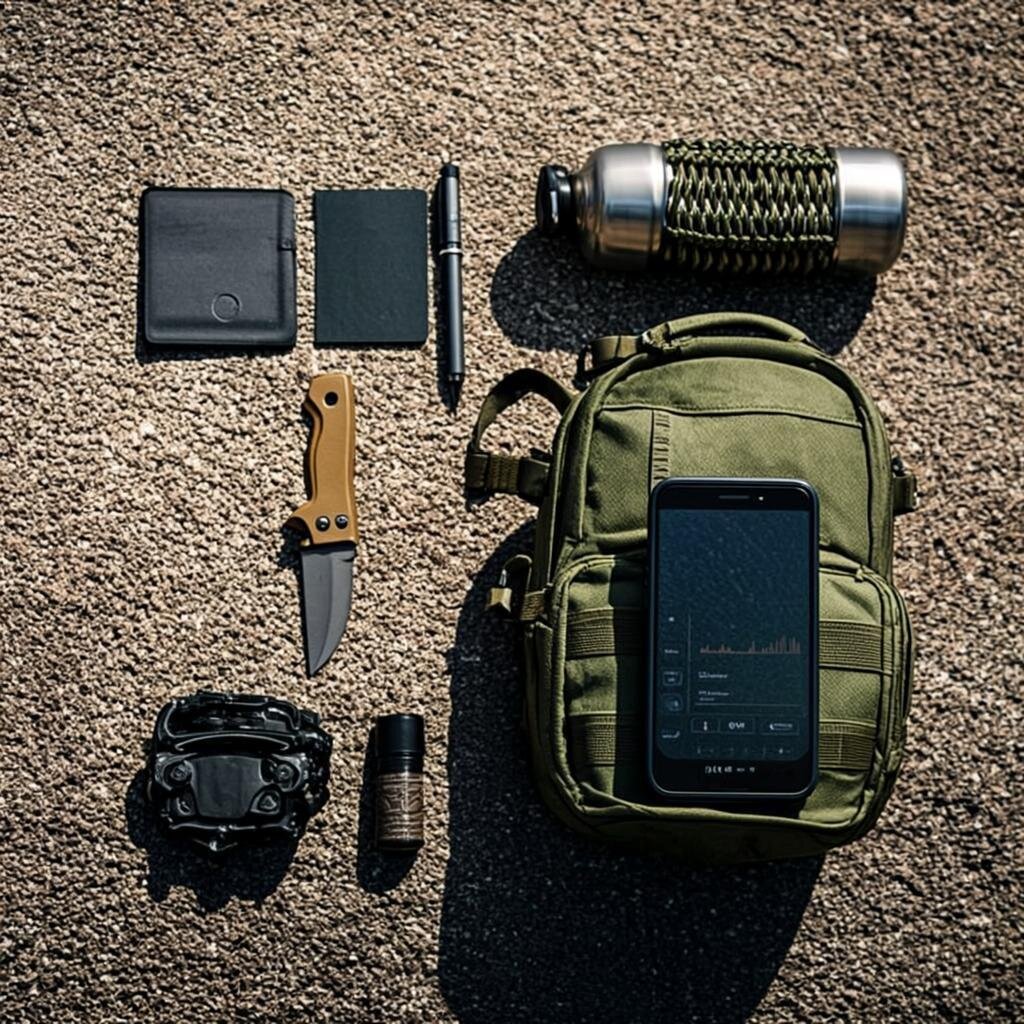
Walk into any premium lifestyle store in 2026 and you will notice something peculiar. The water bottles have paracord handles. The wallets are made from military-grade Kevlar. The rucksacks feature MOLLE webbing — the same modular attachment system designed for soldiers to carry ammunition pouches — now repurposed for holding reusable coffee cups and laptop chargers. We are living in an age where the aesthetic of warfare has been so thoroughly absorbed into everyday consumer culture that we no longer recognise it as such.
The ‘tactical lifestyle’ market, once the preserve of survivalists and military enthusiasts, has ballooned into a multi-billion-pound global industry. Brands like GORUCK, which was founded by a former US Army Green Beret, now sponsor endurance events attended by accountants and marketing executives who pay handsomely to carry weighted rucksacks through city streets at dawn. The appeal, it seems, is not about preparing for war — it is about borrowing the psychological architecture of warfare to impose meaning and discipline on increasingly uncertain civilian lives.
What is striking is how seamlessly the language and material culture of the military has migrated into the mainstream. We drink from vessels engineered for combat zones. We wear jackets constructed from fabrics developed to protect soldiers from shrapnel and flame. We carry everyday objects in bags designed to keep field medical supplies dry. War, it turns out, has become the unlikely muse of modern lifestyle design — and its influence is far deeper than mere fashion.
The Resilience Industry and the Weaponisation of Wellness
Perhaps nowhere is war’s cultural fingerprint more visible than in the wellness industry. Scroll through any fitness influencer’s feed and you will encounter a vocabulary that would not sound out of place in a military training manual: ‘resilience’, ‘grit’, ‘mental toughness’, ‘resilience protocols’, ‘stress inoculation’. The modern wellness movement has effectively adopted the psychological frameworks developed for soldiers returning from combat and repackaged them as lifestyle optimisation.
Cold water immersion, once a niche practice, is now a mainstream ritual championed by everyone from City bankers to schoolteachers. The practice draws direct lineage from military training regimes designed to build mental fortitude under extreme conditions. Wim Hof, perhaps the most famous proponent of cold therapy, routinely references special forces training in his methodology. Meanwhile, breathwork apps — some developed in consultation with military psychologists — promise to help civilians regulate their nervous systems using techniques originally designed to help soldiers manage panic during combat.
The irony is palpable. In an era of unprecedented material comfort, large segments of the population are voluntarily subjecting themselves to physical discomforts associated with military conditioning. Sociologists suggest this reflects a deep cultural anxiety — a sense that modern life has become too soft, too unpredictable, too lacking in the kind of clear adversity that once gave human life a sense of purpose and structure. War, or rather the simulation of its hardships, has become a corrective mechanism for the perceived deficiencies of peace.
Prepper Chic: From Fringe Paranoia to Mainstream Aesthetic
A decade ago, ‘preppers’ were widely regarded as paranoid eccentrics — people who stockpiled tinned food and built bunkers in anticipation of catastrophes that would never come. Today, preparedness has undergone a remarkable image transformation. It has become, of all things, fashionable.
The modern prepper aesthetic is visible across social media platforms, where influencers showcase meticulously organised ‘go-bags’ containing emergency rations, water purification systems, and first-aid kits. These are not presented as the paranoid accoutrements of doom-mongers but as the sensible accessories of a thoughtful, responsible adult. The aesthetic borrows heavily from military logistics — the careful categorisation, the modular storage systems, the emphasis on redundancy and preparedness — and reframes it as a form of self-care.
This shift has been driven by a confluence of factors: the visible instability of global geopolitics, the experience of pandemic-era supply chain failures, and a growing awareness that the systems underpinning everyday life are more fragile than they appear. But what is genuinely novel is how preparedness has been aestheticised. It is no longer enough to be ready; one must be ready with style. The go-bag must be crafted from sustainable materials. The emergency rations must be organic. Even the culture of war, it seems, must be adapted to meet the sensibilities of the ethically conscious consumer.
How Military Technology Shaped Our Digital Habits
The technologies that define modern daily life are, in many cases, direct descendants of military innovation. The internet itself grew from ARPANET, a project funded by the US Department of Defense. GPS, which now guides us to restaurants and tracks our morning runs, was developed for military navigation. The drones that deliver packages and capture wedding videography evolved from military surveillance technology. This is well-documented. What is less examined is how the logic of military technology has shaped our psychological relationship with our devices.
Consider the way modern smartphones function as perpetual intelligence-gathering devices. They track our movements, monitor our communications, and compile dossiers of behavioural data — functions that mirror military surveillance systems. The user interface of many popular apps borrows design principles from military command-and-control dashboards: real-time data feeds, alert systems, situational awareness maps. We have, in effect, internalised the operational rhythms of military intelligence into our daily routines, checking our devices with the compulsive vigilance of a sentry monitoring a perimeter.
Even the gamification elements that permeate modern digital life — progress bars, achievement badges, ranking systems — echo the debriefing and commendation structures of military culture. We earn ‘streaks’ for daily app usage as though accumulating service records. We monitor our productivity metrics with the intensity of an officer reviewing operational performance. The military mindset, mediated through technology, has become so embedded in our digital behaviour that we no longer recognise its origins.
War Photography and the Visual Grammar of Modern Life
The visual culture of war has profoundly shaped how we see the world, quite literally. The conventions of war photography — the grainy texture, the desaturated palette, the emphasis on raw human emotion amid destruction — have migrated into fashion editorials, music videos, and brand advertising. The ‘combat aesthetic’ is now so pervasive that it functions almost invisibly as a default visual language for conveying authenticity and emotional weight.
This influence extends beyond aesthetics into the very tools we use to create images. The action cameras that extreme sports enthusiasts strap to their helmets descend from technology developed for documenting military operations. The drone footage that opens every other property listing and travel vocation video owes its existence to military reconnaissance technology. Even the filters we apply to our social media posts — those that add grain, increase contrast, or simulate the look of film stock — often unconsciously mimic the visual texture of war photojournalism, lending ordinary images a sense of gravity and consequence they might not otherwise possess.
What this suggests is that war has become a kind of visual shorthand for seriousness and truth. In a media landscape saturated with polished, artificial imagery, the raw aesthetic of conflict photography signals authenticity. Advertisers understand this implicitly, which is why everything from perfume to political campaigns borrows the visual grammar of war to lend their messages weight. We are, perhaps uncomfortably, drawn to the look of conflict because it promises something that glossy commercial imagery cannot: the suggestion that what we are seeing matters.
The Quiet Militarisation of Domestic Space
Step inside a contemporary apartment decorated in what interior designers call ‘industrial minimalism’ and you are, in effect, entering a space subtly modelled on military architecture. Exposed concrete, steel fixtures, utilitarian furniture, and a stripped-back aesthetic that prioritises function over ornamentation — these design choices echo the barracks, the bunker, and the field operations centre far more than they do the traditional domestic interior.
This is not coincidental. The minimalist movement, which has dominated interior design for the better part of a decade, shares deep philosophical DNA with military efficiency. Both emphasise the elimination of excess, the standardisation of essentials, and the creation of environments that can be rapidly adapted to changing circumstances. The popularity of modular furniture, multi-functional spaces, and storage systems designed for maximum efficiency reflects a domestic culture that has internalised the logistical principles of military organisation.
Even the growing interest in home security — smart locks, surveillance cameras, panic rooms — reflects a seepage of military-grade defensive thinking into the domestic sphere. The home, once conceived as a sanctuary from the world’s dangers, is increasingly designed and equipped as though it were a forward operating base. Whether this represents reasonable prudence or cultural anxiety run amok depends on one’s perspective, but the trend itself is unmistakable: the boundary between the civilian home and the military installation has become blurred in ways that would have seemed extraordinary a generation ago.
What This Tells Us About Ourselves
The pervasive influence of war on modern culture and lifestyle is not, ultimately, a story about militarism. It is a story about how human beings respond to uncertainty. Faced with a world that feels increasingly volatile — climatically, politically, economically — we reach for the cultural tools that have historically been associated with surviving extreme conditions. We borrow the aesthetics, the language, and the material culture of warfare not because we want war, but because we want the things war promises to deliver: resilience, preparedness, clarity of purpose.
This is not necessarily a cause for alarm. The domestication of military-inspired design and practice can produce genuinely positive outcomes: more durable products, more thoughtful approaches to mental health, more resilient communities. But it does warrant reflection. When the aesthetics of conflict become so normalised that they are invisible, we risk losing sight of the reality they reference. War is not a lifestyle choice. It is a catastrophe that destroys lives and communities. The fact that its cultural byproducts can be repurposed for civilian life is a testament to human adaptability, but it should not obscure the terrible cost at which those byproducts were generated.
Perhaps the most honest response is to acknowledge the paradox: we live in an age that borrows liberally from the culture of war whilst hoping never to experience its reality. That hope, in 2026, feels more fragile than it has for generations. The camouflage economy, for all its commercial vitality, is ultimately a symptom of a society preparing — aesthetically, psychologically, materially — for a future it cannot confidently predict.